The Fall of Constantinople
This article is written in English. Choose a language to open an automatic translation by Google Translate. Automatic translations can sometimes get historical names and dates wrong — for full accuracy, read the original English article.
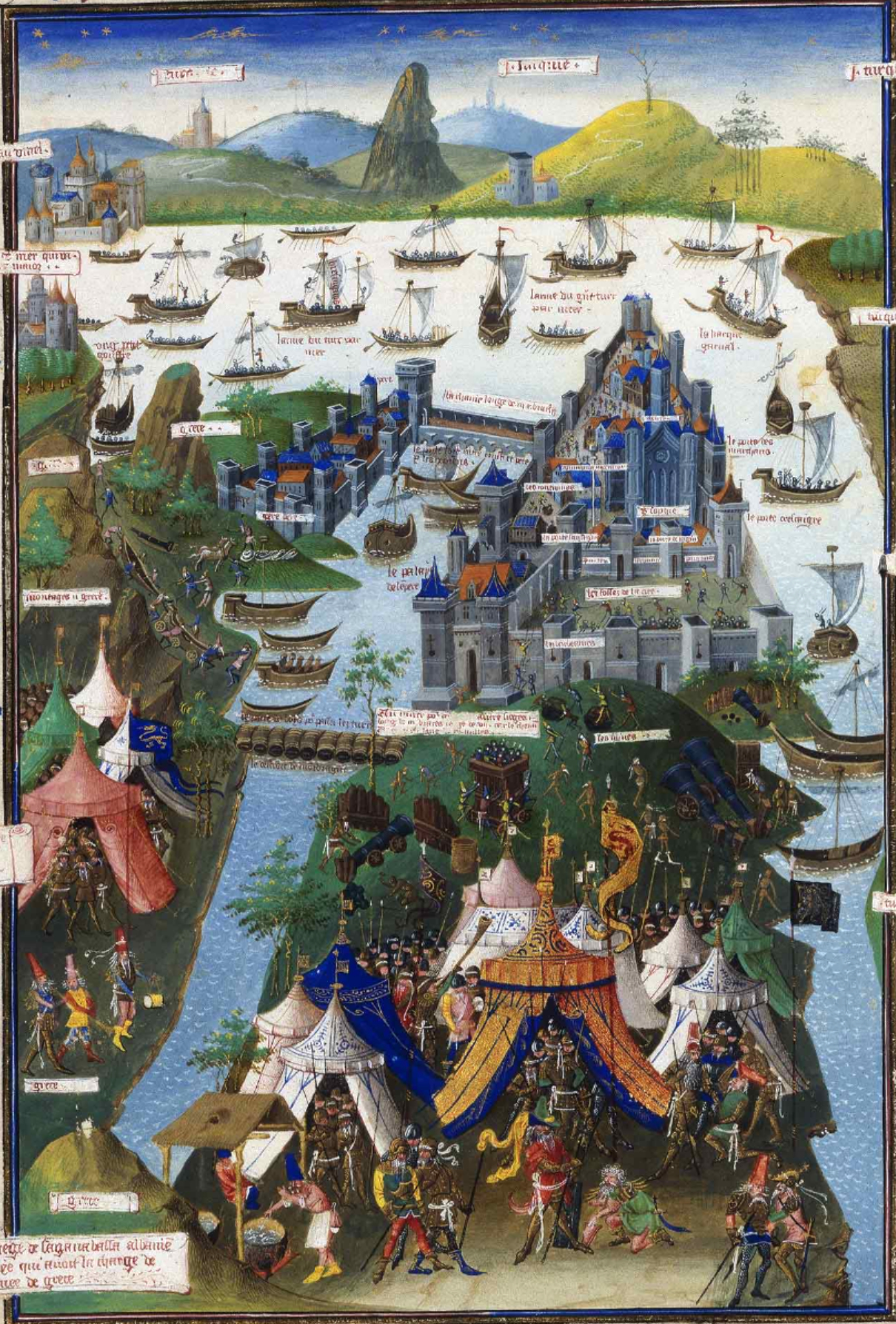
Image: · Public domain · Wikimedia Commons
Constantinople — modern Istanbul — was the capital of the Byzantine Empire for more than a thousand years, protected by the most famous walls in the world. On 29 May 1453, after a siege of 53 days, the city fell to the Ottoman Turks under the young Sultan Mehmed II.
The fall ended the Byzantine Empire, the last heir of ancient Rome. It is often used as a marker for the end of the Middle Ages and the beginning of a new age in Europe and the Middle East.
Key Facts
- ['Date', '29 May 1453, after a siege beginning on 6 April']
- ['Attackers', 'The Ottoman Empire, under Sultan Mehmed II, aged 21']
- ['Defenders', 'The Byzantine Empire, under Emperor Constantine XI']
- ['Forces', 'About 80,000 Ottomans against roughly 7,000 defenders']
- ['Key weapon', 'Giant cannons, including one built by the founder Orban']
- ['Result', 'Constantinople became the Ottoman capital, later called Istanbul']
A city of legends, a shrinking empire
By 1453 the once-mighty Byzantine Empire had shrunk to little more than the city itself. Constantinople's wealth had faded, but its triple walls, facing both land and sea, had resisted sieges for a thousand years.
The new Ottoman sultan, Mehmed II, was determined to take the city. He built a fortress on the Bosphorus to control the straits and gathered one of the largest armies of the age, together with a fleet and enormous bronze cannons.
Fifty-three days of siege
The Ottomans pounded the walls day and night. Their largest cannon could fire stone balls weighing more than 500 kg, though it could manage only a few shots a day and later cracked.
The defenders, hugely outnumbered, repaired the walls each night. In a brilliant move, Mehmed had dozens of ships dragged overland on greased logs into the Golden Horn harbour, bypassing the great chain that blocked its mouth. On the night of 28 to 29 May, wave after wave of Ottoman troops attacked until the walls were overwhelmed. Emperor Constantine XI died fighting, refusing to flee.
A new capital, a changed world
Mehmed entered the city and ordered the looting stopped. He made Constantinople his capital and began rebuilding it, inviting people of many faiths to settle. The great church of Hagia Sophia became a mosque, as it remained for nearly 500 years.
Many Greek scholars fled west to Italy carrying ancient books, helping to feed Europe's Renaissance. The city, gradually known as Istanbul, remained the capital of the Ottoman Empire until the empire ended after the First World War.
Mehmed II was only 21 years old when he conquered Constantinople. He is remembered in Turkey as Mehmed the Conqueror.
Related Topics
Sources
Reviewed: 22 November 2026
Read this article in the interactive Pastloom reader →