This article is written in English. Choose a language to open an automatic translation by Google Translate. Automatic translations can sometimes get historical names and dates wrong — for full accuracy, read the original English article.
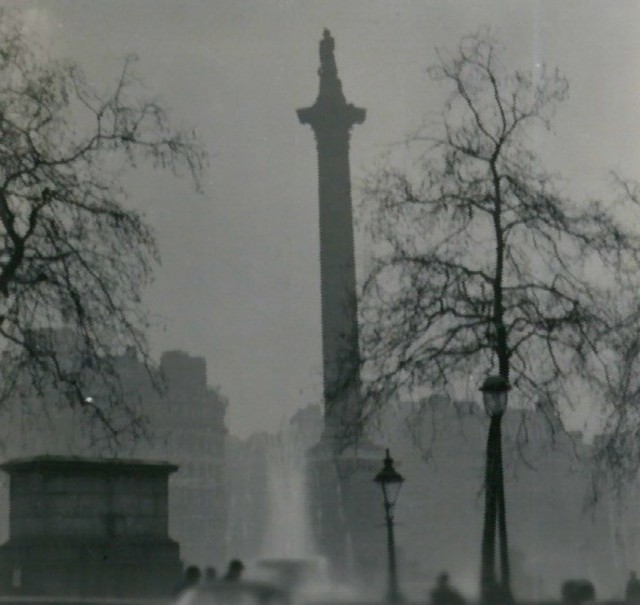
Nelson's Column during the Great Smog of 1952 Original description: Nelson's Column in December. Foggy Day in December 1952. Image: N T Stobbs · CC BY-SA 2.0 · Wikimedia Commons
In December 1952, a thick yellow-black fog mixed with coal smoke — a smog — covered London for five days. People could not see their own feet, buses stopped, and breathing became dangerous.
The Great Smog killed thousands of Londoners, most of them elderly people and babies. The shock finally forced Britain to clean its air, leading to the famous Clean Air Act of 1956.
Key Facts
['Dates', '5 to 9 December 1952']
['Place', 'London, England']
['Cause', 'Cold, windless weather trapping coal smoke over the city']
['Visibility', 'In places, less than a few metres']
['Died', 'About 10,000 to 12,000 extra deaths are now blamed on the smog']
['Result', 'The Clean Air Act of 1956']
The city disappears
London had suffered thick pea-souper fogs for centuries, but December 1952 was different. A high-pressure system settled over the city with no wind, and cold weather made everyone burn more coal at home.
Smoke from chimneys, factories and steam trains mixed with fog and could not escape. A yellow-black blanket covered London. Airports closed, trains crawled, and even indoor concerts were cancelled because the audience could not see the stage.
The silent killer
At first, no one realised how deadly the smog was. Hospitals filled with people struggling to breathe, and undertakers ran out of coffins. Official figures at the time counted about 4,000 extra deaths.
Later studies showed the true toll was far higher — around 10,000 to 12,000 deaths, with many more people left with damaged lungs. Cattle at a show at Earl's Court died where they stood, suffocated by the poisoned air.
Clean air at last
The disaster shamed the government into action. The Clean Air Act of 1956 created smoke control areas in cities, where only smokeless fuels could be burned, and helped people switch to gas and electric heating.
London's killer fogs slowly became history. The Great Smog is still remembered as the event that taught industrial countries that air pollution is not just dirty — it can kill.
Did You Know?
During the Great Smog, criminals had a field day in the darkness — but so did one honest problem: some London bus conductors had to walk in front of their buses with flaming torches so the drivers could creep along.