This article is written in English. Choose a language to open an automatic translation by Google Translate. Automatic translations can sometimes get historical names and dates wrong — for full accuracy, read the original English article.
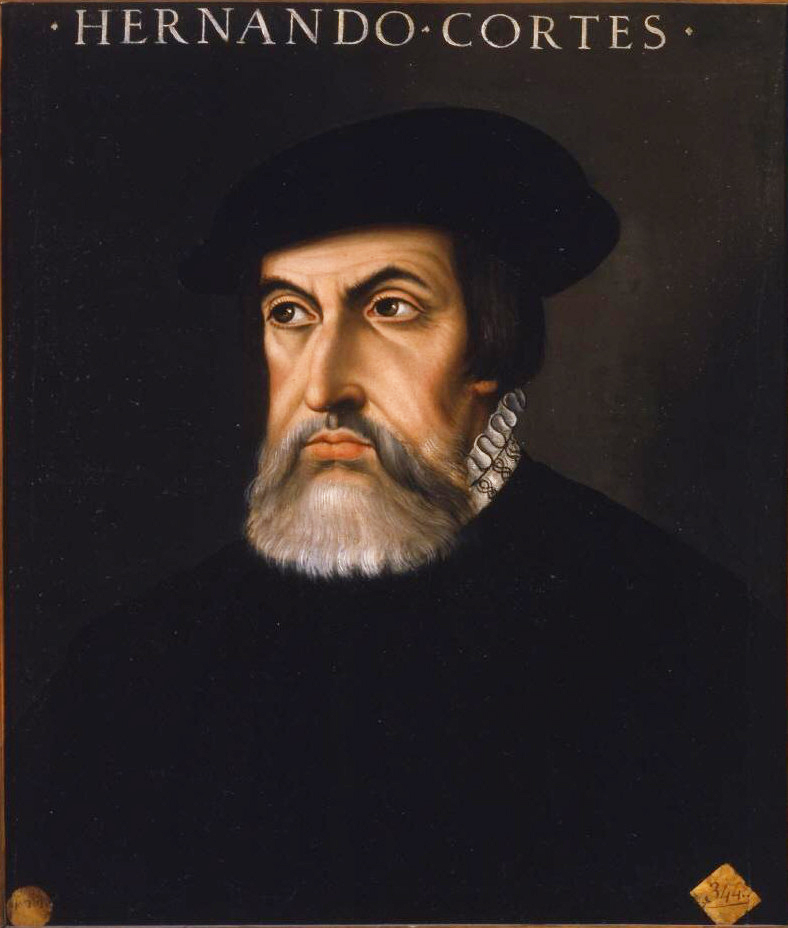
Spanish conquistador and explorer (1485–1547). Image: Unknown artist Unknown artist · Public domain · Wikimedia Commons
Hernan Cortes (1485–1547) was the Spanish conquistador who led the conquest of the Aztec Empire in Mexico. His victory made him famous across Europe — and one of the most debated figures in history.
To Spain he was a hero who won a vast new colony. To many Mexicans he is the invader whose war, together with disease and Indigenous allies, destroyed Tenochtitlan and began 300 years of colonial rule.
Key Facts
['Born', '1485, Medellin, Spain']
['Died', '1547, near Seville, Spain']
['Known for', 'Conquering the Aztec Empire, 1519–1521']
['Key helpers', 'Translator Malinche and the Tlaxcala allies']
['Reward', 'Made Marquis of the Valley of Oaxaca']
['Later life', "Fell out of favour with Spain's king"]
From Cuba to the mainland
Cortes settled in Cuba after taking part in its conquest. In 1519, against the wishes of Cuba's governor, he sailed to Mexico with about 500 men, 11 ships and 16 horses.
On landing he founded Veracruz and — according to the famous story — destroyed his ships so his men could not turn back. His letters to the king of Spain presented the whole campaign as loyal service.
The conquest of Mexico
Cortes's success depended on more than Spanish steel and horses. The translator Malinche gave him language and intelligence, and the Tlaxcala and other nations gave him an army of tens of thousands.
After the siege of Tenochtitlan in 1521, the Aztec Empire fell. Cortes governed New Spain at first, organised expeditions, and grew rich on gold and land.
Fame, lawsuits and a quiet end
Rivals accused Cortes of cruelty and greed, and the Spanish crown, fearing his power, stripped him of government. He spent years in lawsuits defending his name and wealth.
He died in 1547 near Seville, still planning to return to Mexico. His remains were moved many times — a restless end for a man whose actions changed two continents.
Did You Know?
Cortes's own letters to the king are a major source for the conquest — but they were written to make himself look good, so historians read them with care.