This article is written in English. Choose a language to open an automatic translation by Google Translate. Automatic translations can sometimes get historical names and dates wrong — for full accuracy, read the original English article.
Animation is the art of making drawings move. Artists discovered that if pictures change quickly, one after another, our eyes blend them into motion — a trick that turned still drawings into living characters.
From hand-drawn fairy tales to computer-made blockbusters, animation has carried some of the most loved stories ever told.
Key Facts
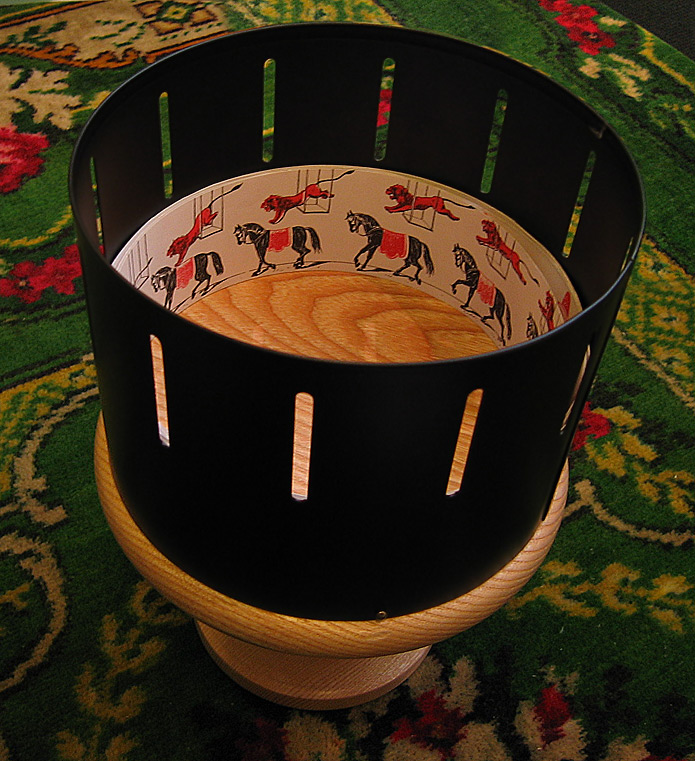
['Old trick', 'The flip book and the zoetrope (1830s) made drawings seem to move']
['Early star', 'Gertie the Dinosaur, 1914']
['First full cartoon film with sound', 'Steamboat Willie, 1928 — Mickey Mouse']
['First animated feature film', 'Snow White and the Seven Dwarfs, 1937']
['Japanese anime rises', 'Astro Boy TV series, 1963; Studio Ghibli founded 1985']
['Computer age', 'Toy Story, 1995 — first fully computer-animated feature']
Drawings learn to move
Long before film, toys played with the secret of animation: flip a book's pages and a drawing dances; spin a zoetrope drum and its pictures gallop. Early filmmakers drew thousands of frames by hand — Winsor McCay's Gertie the Dinosaur (1914) needed about 10,000 drawings.
In the 1920s, studios in America industrialised the art with teams of artists, transparent cels and assembly lines of ink and paint. Walt Disney added sound and colour: Steamboat Willie (1928) launched Mickey Mouse, and Flowers and Trees (1932) bloomed in full Technicolor.
Features, television and anime
Many said a cartoon could not hold an audience for a whole film. Disney's Snow White (1937) proved them gloriously wrong and opened the age of the animated feature.
Television brought cheaper, simpler cartoons into homes in the 1950s and 60s. In Japan, Osamu Tezuka's Astro Boy shaped the style of anime, and Studio Ghibli's films — such as My Neighbor Totoro and Spirited Away — showed animation could be gentle, deep and world-famous.
The computer takes the pencil
Computers first helped with colour and camera moves, then took over entirely: Pixar's Toy Story (1995) was made wholly in 3D, and audiences loved it.
Today animators blend every technique — hand drawing, stop-motion puppets and digital worlds — and short animations made by single artists reach millions online. The drawings still move by the same old trick of the eye.
Did You Know?
Snow White's success was so unexpected that Walt Disney's team called the project Disney's Folly before release — it became the highest-earning film of its time.