This article is written in English. Choose a language to open an automatic translation by Google Translate. Automatic translations can sometimes get historical names and dates wrong — for full accuracy, read the original English article.
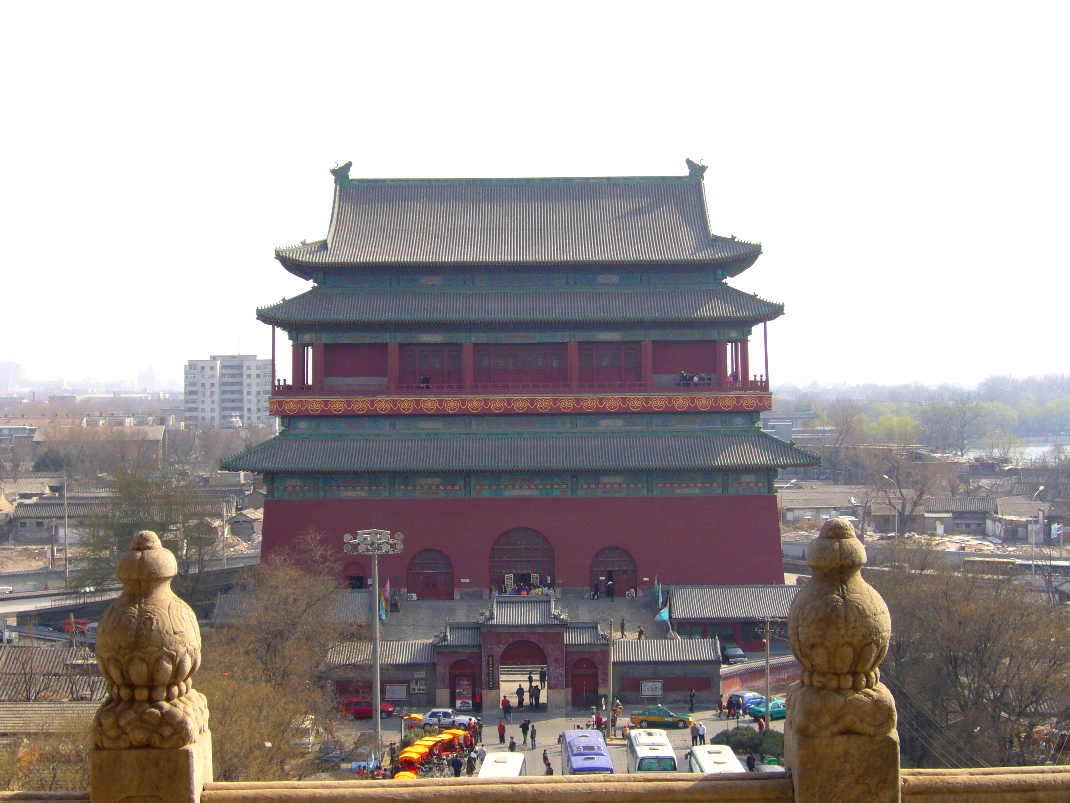
Capital of the Yuan dynasty. Image: Bergmann · CC BY-SA 3.0 · Wikimedia Commons
Beijing, the capital of China, has been a great city for more than 3,000 years. Its name means Northern Capital, and emperors ruled China from its palaces for most of the last 700 years.
At its heart stands the Forbidden City, a vast palace of golden roofs where 24 emperors of the Ming and Qing dynasties lived. Today Beijing is a modern capital of about 21 million people.
Key Facts
['Name means', 'Northern Capital']
['Early city', 'Ji, a capital over 3,000 years ago']
['Mongol capital', 'As Dadu, under Kublai Khan']
['Forbidden City built', '1406–1420, under the Yongle Emperor']
['Emperors who lived there', '24 — Ming and Qing dynasties']
['Olympic Games', '2008 Summer and 2022 Winter — the only city to host both']
From Ji to Dadu
People have lived near Beijing for a very long time — the bones of Peking Man, an early human, were found in caves at Zhoukoudian nearby. About 3,000 years ago a walled city called Ji stood here, capital of a small state.
Many dynasties used the site as a northern stronghold. In the 1200s the Mongol ruler Kublai Khan made it his capital, Dadu, and from there ruled all China as founder of the Yuan dynasty. The traveller Marco Polo described its wealth with wonder.
The imperial capital
In 1420 the Yongle Emperor of the Ming dynasty moved China's capital here and renamed it Beijing. His builders raised the Forbidden City — nearly 1,000 buildings behind red walls and a moat — and the Temple of Heaven, where emperors prayed for good harvests.
The Qing dynasty, China's last, ruled from the same palaces from 1644 to 1912. Emperors added gardens and summer palaces, while the city's hutong lanes filled with officials, merchants and craftsmen. In 1900 foreign armies occupied Beijing during the Boxer Rebellion, a deep humiliation for China.
Capital of modern China
After the last emperor fell in 1912, the city — then called Beiping — passed through warlord and Japanese occupation years. In 1949 it became Beijing again, capital of the People's Republic of China, proclaimed at Tiananmen, the gate of the Forbidden City.
Today Beijing mixes imperial palaces with skyscrapers, ring roads and one of the world's busiest airports. In 2022 it became the first city ever to host both the Summer and Winter Olympic Games.
Did You Know?
The Forbidden City has about 9,000 rooms — legend long claimed 9,999, because only the gods were allowed a full 10,000.