History of Cave Exploration
This article is written in English. Choose a language to open an automatic translation by Google Translate. Automatic translations can sometimes get historical names and dates wrong — for full accuracy, read the original English article.
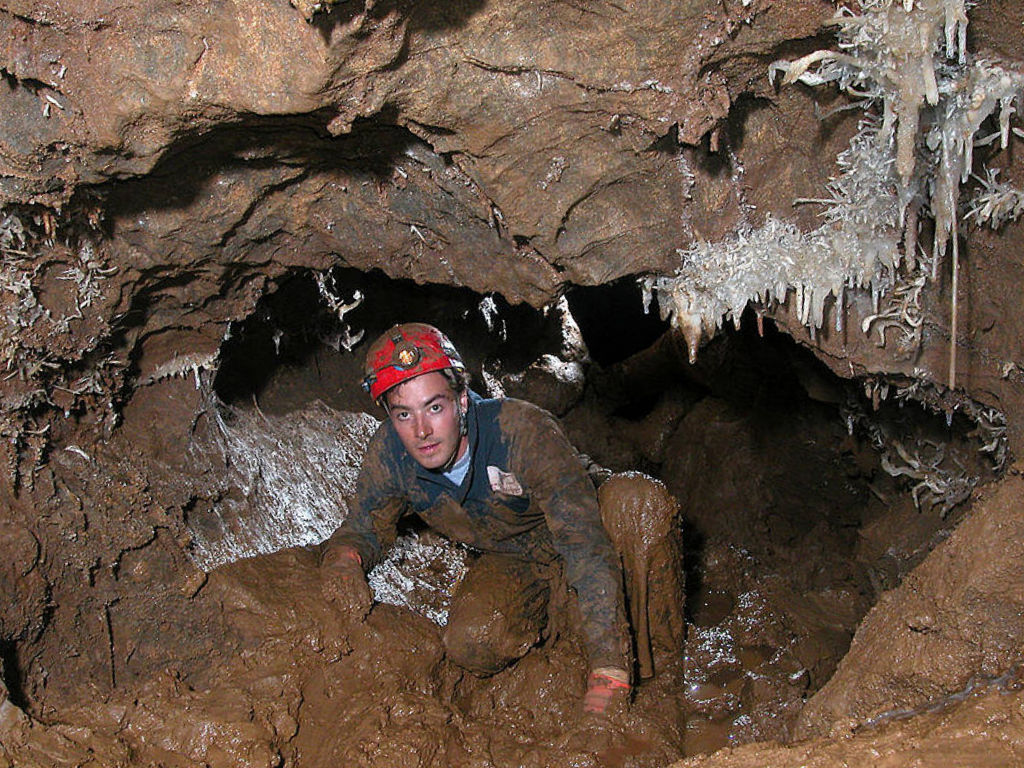
Image: Original uploader was Dave Bunnell at en.wikipedia · CC BY-SA 2.5 · Wikimedia Commons
Beneath our feet lies a hidden world of caves — underground rivers, crystal halls and passages longer than whole mountain ranges. Humans sheltered in caves in prehistory, but exploring deep caves as a science and a sport is barely 150 years old.
The pioneers who first roped down into the darkness, lamp in hand, opened a new frontier that is still not fully mapped today.
Key Facts
- ['First frontier', 'Prehistoric people sheltered in caves and painted their walls — but rarely ventured deep']
- ['Father of cave science', 'Édouard-Alfred Martel explored and mapped caves across Europe in the 1880s and 1890s']
- ['Longest cave', 'Mammoth Cave in Kentucky, USA — over 675 kilometres of passages mapped so far']
- ['Deepest cave', 'Veryovkina Cave in Georgia descends more than 2,200 metres']
- ['A famous guide', "Stephen Bishop, an enslaved man, became Mammoth Cave's most celebrated explorer-guide in the 1830s–1850s"]
- ['Show caves', 'Postojna Cave in Slovenia has welcomed tourists since the early 1800s — with its own underground railway since 1872']
From shelter to mystery
Caves were humanity's first homes and temples, and later places of burial, worship and hiding. But people stayed near the entrances, where daylight reached. The deep dark beyond — with its pits, rivers and strange air — belonged to spirits and stories.
A few practical needs drew people deeper: saltpetre for gunpowder was dug from caves, including Mammoth Cave during the War of 1812, and guides began leading curious visitors underground by torchlight.
Martel and the birth of cave science
The French lawyer Édouard-Alfred Martel changed everything. From the 1880s he explored caves systematically — with ropes, ladders, boats and careful maps — descending hundreds of shafts across Europe and founding speleology, the science of caves.
In America, Mammoth Cave's guides were its true explorers. Stephen Bishop, brought there as an enslaved teenager, crossed the terrifying 'Bottomless Pit' on a cedar ladder in 1838 and opened miles of new passages, mapping them from memory. His map, drawn from what he alone knew, was used for decades.
Going deeper
In the 1900s carbide lamps, then electric lights, climbing gear and the single-rope technique let cavers descend shafts that Martel could never have attempted. Depth records fell one after another in the caves of France, Spain and finally Georgia, where Veryovkina Cave passes 2,200 metres down.
Caves turned out to be archives as well as adventures: their stalagmites hold records of ancient climates, their rivers supply drinking water, and their chambers shelter rare blind fish and bats. Explorers still find new passages every year — the underground map is unfinished.
Stephen Bishop mapped Mammoth Cave's passages from memory after exploring them by candlelight — and visitors said the enslaved guide knew the cave better than any man alive. He was freed only a year before his death in 1857.
Related Topics
Sources
Reviewed: 22 November 2026
Read this article in the interactive Pastloom reader →