This article is written in English. Choose a language to open an automatic translation by Google Translate. Automatic translations can sometimes get historical names and dates wrong — for full accuracy, read the original English article.
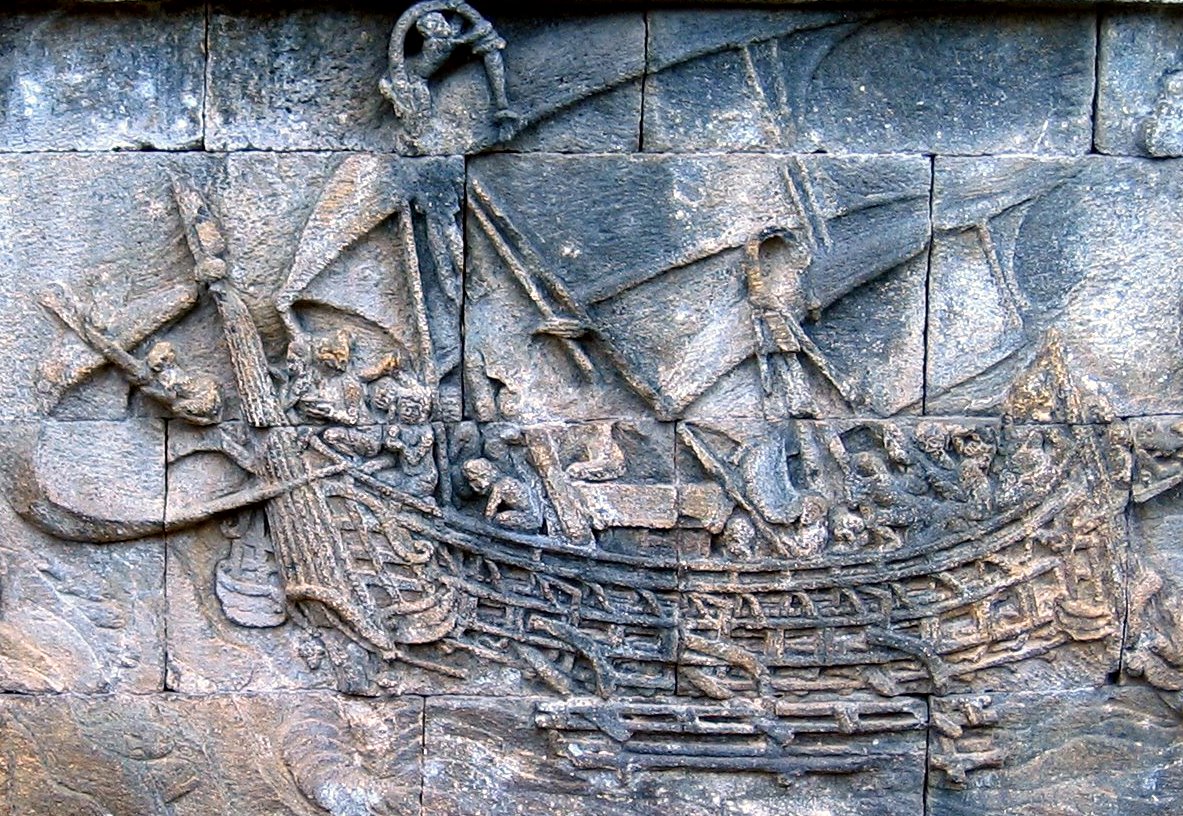
Relief panel of a ship at Borobudur. Image: MichaelJLowe · CC BY-SA 2.5 · Wikimedia Commons
Indonesia is the world's largest island country, with more than 17,000 islands spread across the equator. Seafarers, traders and kingdoms have shaped it for well over a thousand years.
Its spices — nutmeg, cloves and pepper — drew European traders, and the Dutch ruled the islands for centuries. Indonesia declared independence in 1945, led by its first president, Sukarno.
Key Facts
['Islands', 'More than 17,000']
['Ancient empires', 'Srivijaya and Majapahit']
['Famous temple', 'Borobudur, built about 800 CE']
['Dutch rule', 'From the 1600s — the Dutch East Indies']
['Independence declared', '17 August 1945']
['First president', 'Sukarno']
Island kingdoms
Sailors and traders crossed Indonesia's seas from ancient times. The Buddhist Sailendra kings built Borobudur in Java, one of the largest Buddhist monuments in the world.
The Srivijaya Empire of Sumatra controlled the sea routes between India and China, and later the Majapahit Empire of Java spread its power across many islands. Islam arrived with traders from the 1200s and slowly became the faith of most Indonesians.
The spice trade and Dutch rule
Everyone in Europe wanted Indonesia's spices. The Portuguese arrived first, then the Dutch East India Company — founded in 1602 and one of the first great trading companies in the world.
Step by step the Dutch took control of the islands, ruling them as the Dutch East Indies and forcing farmers to grow crops for export. Indonesian resistance never fully stopped.
Independence
Japan occupied the islands during World War II. When Japan fell in 1945, Sukarno and Mohammad Hatta proclaimed independence, and after four years of struggle the Dutch recognised it in 1949.
Sukarno led the new republic, followed by Suharto's long rule from the late 1960s to 1998. Since then Indonesia has been a democracy — and the world's fourth most populous country.
Did You Know?
Nutmeg once grew naturally in only one place on Earth — Indonesia's Banda Islands — which is why European powers fought so fiercely over these tiny islands.