This article is written in English. Choose a language to open an automatic translation by Google Translate. Automatic translations can sometimes get historical names and dates wrong — for full accuracy, read the original English article.
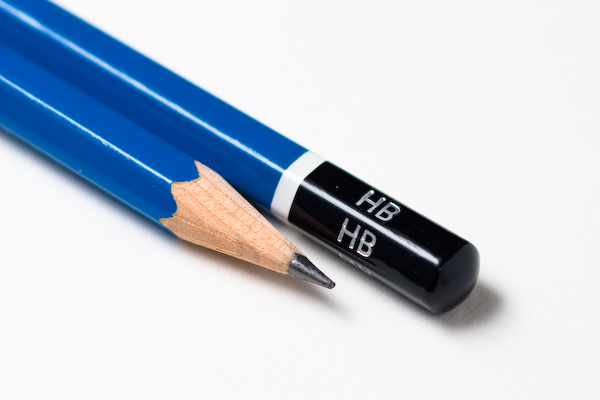
HB graphite pencils. Image: Original uploader was Dmgerman at en.wikipedia · CC BY 3.0 · Wikimedia Commons
Pencils and pens put writing into everyone's hands. The pen is ancient — Egyptians wrote with reed pens 5,000 years ago — but the pencil is younger, born from a lucky discovery of pure graphite in England in the 1500s.
Together they carried writing out of palaces and monasteries into schools, offices and pockets all over the world.
Key Facts
['Reed pens', 'Used in ancient Egypt from about 3000 BCE']
['Quill pens', "Feather quills become Europe's main pen for over 1,000 years"]
['Graphite found', 'A great deposit at Borrowdale, England, in the 1560s — first used wrapped in string or wood']
['Modern pencil', "Nicolas-Jacques Conté mixes graphite and clay in 1795 — still the pencil's recipe"]
['Fountain pen', 'Reliable fountain pens arrive in the 1880s']
['Ballpoint', 'László Bíró patents the ballpoint in 1938; the Bic Cristal follows in 1950']
Pens of reed and feather
The first pens were cut reeds: Egyptian scribes dipped them in ink and wrote on papyrus. Romans used reeds and bronze pens, and by the Middle Ages the goose-feather quill ruled Europe.
A good quill had to be cut with a 'pen knife' — the word survives in our pocket knives. Quills wore out in days, and every writer was also a pen-maker, trimming feathers at the desk.
The pencil is born
Around the 1560s, a storm uncovered pure graphite near Borrowdale in England. Shepherds used it to mark sheep; soon sticks of it, held in wood, were sold in London as drawing and writing tools.
Graphite was wrongly believed to be a kind of lead — which is why we still say 'pencil lead' though no lead is in it. In 1795 Conté's mixture of graphite powder and clay let makers control hardness, and the modern pencil — including its famous yellow paint — spread worldwide.
Pens for every pocket
Steel pen nibs, made by machine in the 1800s, ended the quill age and filled the world's schools. Fountain pens with their own ink supply followed, elegant but leaky.
The ballpoint changed everything: Bíró's rolling ball spread thick ink that dried instantly and did not leak in aircraft. After 1950 the cheap Bic pen made a reliable pen cost almost nothing — a writing tool finally as common as the pencil.
Did You Know?
There is no lead in a pencil and never has been — early users mistook graphite for lead ore, and the wrong name has stuck for 450 years.