This article is written in English. Choose a language to open an automatic translation by Google Translate. Automatic translations can sometimes get historical names and dates wrong — for full accuracy, read the original English article.
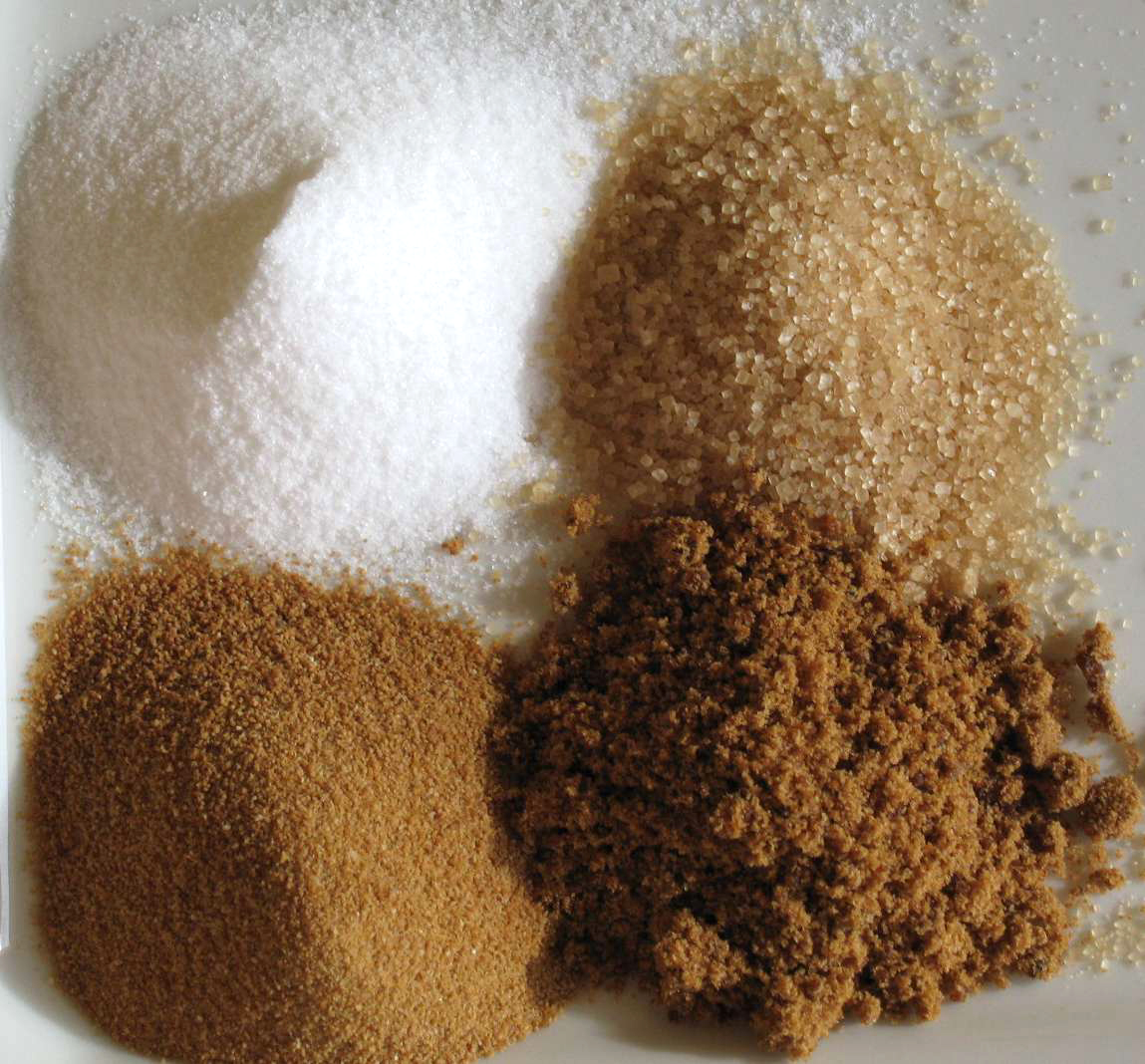
Sugars; clockwise from top left: White refined, unrefined, brown, unprocessed cane. Image: Romain Behar · Public domain · Wikimedia Commons
For most of history, sweetness was rare. Then people in New Guinea began chewing sugarcane about 10,000 years ago, and in India farmers learned to turn its juice into crystals — sugar was born.
Sugar's story is two stories: a tale of cooks, chemists and sweet-toothed kings — and a dark tale of plantations and enslaved people whose suffering paid for Europe's sweetness.
Key Facts
['First chewed', 'Sugarcane in New Guinea, about 10,000 years ago']
['Crystals made in', 'India — the word sugar comes from Sanskrit']
['Spread by', 'Persian and Arab traders and growers']
['Dark chapter', 'Caribbean plantations worked by enslaved Africans']
['Second source', 'Sugar beet, developed in the 1800s']
['Today', 'Eaten in huge amounts worldwide']
From cane to crystals
Sugarcane is a giant sweet grass. People first chewed it raw, then pressed out its juice. In India, by about 2,500 years ago, makers had learned to boil the juice into crystals that kept and travelled well.
The word sugar travels with the product: from Sanskrit śarkarā, through Persian and Arabic, into the languages of Europe. Greek and Roman writers knew sugar as a rare medicine from India, sold at high prices.
Sugar moves west
Arab growers planted cane around the Mediterranean and in Spain, with careful irrigation. Crusaders tasted sugar in the Holy Land and carried the craving home, where it sold as a spice for the rich.
European kings displayed sugar sculptures at feasts, and doctors prescribed sugar for almost everything. But it stayed a luxury — until plantations changed everything.
Plantations, beet and the modern sweet tooth
Columbus carried sugarcane to the Caribbean in 1493. Plantations there, worked by enslaved Africans in brutal conditions, poured cheap sugar into Europe. Sugar wealth and human misery grew together — a central, shameful part of this sweet history.
In the 1800s, sugar from European beet joined cane sugar, prices fell further, and sugar entered every kitchen. Today it sweetens the whole world's food and drink — and doctors debate how much is too much.
Did You Know?
In medieval England, sugar was so expensive that it was sold by apothecaries like a medicine and kept locked away with the spices.