This article is written in English. Choose a language to open an automatic translation by Google Translate. Automatic translations can sometimes get historical names and dates wrong — for full accuracy, read the original English article.
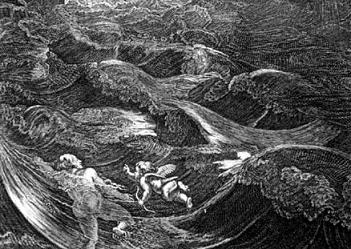
Leandro nadando a través del Helesponto. Detalle de una pintura de Bernard Picart. Image: Bernard Picart · Public domain · Wikimedia Commons
Swimming is one of the most useful and loved skills in human history. People have swum for thousands of years — for food, for travel, for safety and for joy.
In the last 200 years swimming also became a great sport, with races, strokes and records, and the Olympic pool is now one of the most watched stages on Earth.
Key Facts
['Oldest evidence', 'Cave paintings of swimmers in Egypt, about 10,000 years old']
['First swimming races', 'Organised in England in the 1830s–40s']
['In the modern Olympics', 'From the very first Games, Athens 1896']
['Main strokes', 'Freestyle (front crawl), breaststroke, backstroke and butterfly']
['Most decorated Olympian', 'Michael Phelps — 28 Olympic medals, 23 of them gold']
['First to swim the English Channel', 'Captain Matthew Webb, in 1875']
Swimmers of the ancient world
Rock paintings in the Egyptian desert show figures swimming thousands of years ago. The Assyrians, Greeks and Romans all valued swimming — Roman soldiers trained in the water, and a Greek saying mocked an uneducated man as one who could 'neither read nor swim'.
For centuries in medieval Europe swimming went out of fashion, feared as unhealthy. But in Japan, samurai trained in the water, and in Africa, the Pacific and the Americas, peoples who lived by rivers and seas swam superbly — and taught the world how.
Racing begins
In the 1800s, England built indoor pools and held the first swimming races. At first everyone swam breaststroke; then faster styles arrived — including the overarm 'crawl', learned from Native American and Pacific swimmers who astonished British crowds with their speed.
Swimming was part of the first modern Olympics in 1896, with races in the open sea. Pools, lanes and rules followed, and women's Olympic swimming began in 1912.
The sport today
The four strokes — freestyle, breaststroke, backstroke and the butterfly, added in the 1950s — are now raced at every level from school galas to the Olympics.
American Michael Phelps won 23 Olympic gold medals, more than any athlete in history. And beyond sport, swimming remains a life skill: learning to swim still saves lives in every country on Earth.
Did You Know?
When Captain Matthew Webb swam the English Channel in 1875, he covered about 64 kilometres in the water — far more than the straight-line distance — because the tides kept pushing him sideways.