History of Treasure Hunting
This article is written in English. Choose a language to open an automatic translation by Google Translate. Automatic translations can sometimes get historical names and dates wrong — for full accuracy, read the original English article.
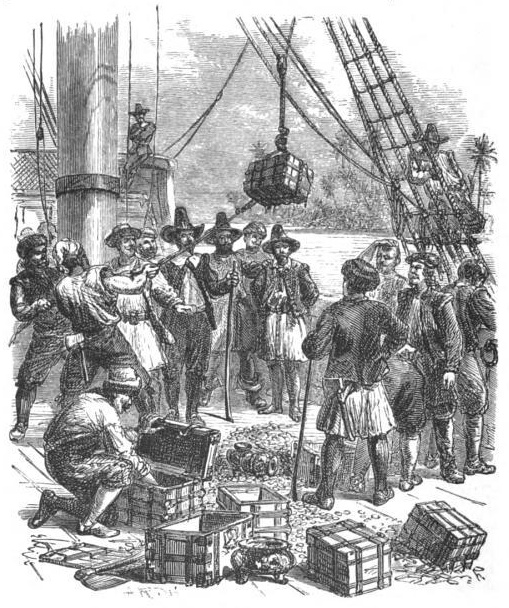
Image: Unknown author Unknown author · Public domain · Wikimedia Commons
Somewhere out there, the story goes, gold lies buried — in a pirate's chest, a sunken galleon, or a lost mine. Treasure hunting is as old as treasure itself: Egyptian tombs were robbed in ancient times, and people are still digging and diving for riches today.
Almost nobody gets rich. But the hunt has produced real finds, famous frauds, and a lasting argument between treasure hunters and archaeologists.
Key Facts
- ['Ancient start', 'Robbers emptied most Egyptian royal tombs within centuries of their building']
- ['Pirate gold', 'Real pirates rarely buried treasure — the idea owes much to the novel Treasure Island (1883)']
- ["A life's search", 'Mel Fisher hunted the galleon Atocha for 16 years before finding its treasure in 1985']
- ['The metal detector', 'Simple detectors appeared in the 1800s; hobby detectors spread from the 1930s']
- ['A modern hunt', 'Forrest Fenn hid a chest of gold in the Rocky Mountains in 2010; it was found in 2020']
- ['The law today', "Many countries protect old wrecks and finds — Britain's Treasure Act of 1996 shares rewards between finders, landowners and museums"]
Robbers, pirates and legends
The first treasure hunters were tomb robbers. Egypt's pharaohs filled their tombs with gold — and thieves, sometimes the very men who built the tombs, emptied most of them within a few centuries. Only Tutankhamun's tomb escaped, hidden under rubble.
Pirates added the romance. Captain Kidd really did bury a small cache on Gardiners Island in 1699 — it was dug up and used against him at his trial. But the maps, crosses and cursed chests of pirate legend mostly come from storybooks, above all Stevenson's Treasure Island.
The age of the great searches
Spain's treasure fleets made the sea floor the greatest vault of all. When the galleon Atocha sank off Florida in 1622, she carried a fortune in silver and gold. Mel Fisher searched for her for sixteen years — losing a son and a daughter-in-law to a diving accident on the way — before his team found the main pile in 1985.
Other hunts became legends in themselves: the Money Pit of Oak Island, dug since 1795, and the lost mines and Jesuit treasures of the American deserts, which have drawn searchers for two centuries.
Detectors, laws and arguments
The metal detector put treasure hunting in everyone's hands. In 2009 a detectorist in an English farm field found the Staffordshire Hoard — the largest cache of Anglo-Saxon gold ever discovered — and museums bought it for the nation.
Archaeologists argue that digging for gold destroys the story around objects, which is often worth more than the gold. Laws now try to balance the two: report your finds, share the rewards, and leave war graves and protected wrecks alone. The hunt goes on — Fenn's hidden chest drew hundreds of thousands of searchers, and cost at least five lives, before it was found in 2020.
The Staffordshire Hoard — over 4,000 pieces of Anglo-Saxon gold and silver, the largest such hoard ever found — was discovered in 2009 by a metal detectorist whose machine had cost him just a few pounds second-hand.
Related Topics
Sources
Reviewed: 22 November 2026
Read this article in the interactive Pastloom reader →