This article is written in English. Choose a language to open an automatic translation by Google Translate. Automatic translations can sometimes get historical names and dates wrong — for full accuracy, read the original English article.
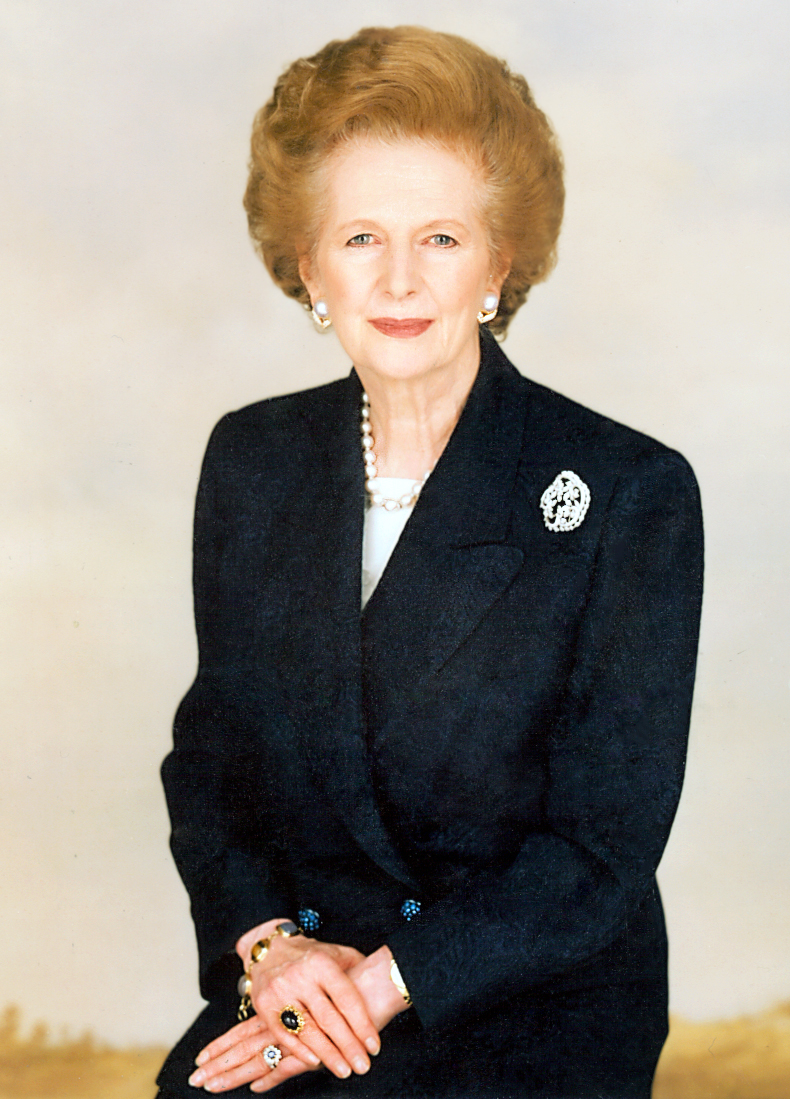
Portrait of Margaret Thatcher (1925–2013). Image: derivative work by Begoon · Copyrighted free use · Wikimedia Commons
Margaret Thatcher was Prime Minister of the United Kingdom from 1979 to 1990 — the longest-serving British prime minister of the 20th century and the first woman to hold the job.
Called the Iron Lady for her firm style, she changed Britain's economy, won the Falklands War, and played a part in the final years of the Cold War. People still argue strongly about her legacy.
Key Facts
['Born', '13 October 1925, in Grantham']
['Nickname', 'The Iron Lady']
['Prime Minister', '1979 to 1990']
['Party', 'Conservative Party']
['Falklands War', '1982 — British victory']
['Died', '8 April 2013, aged 87']
The grocer's daughter
Thatcher was born above her father's grocery shop in Grantham and won a place to study chemistry at Oxford. She worked as a research chemist, studied law, and entered Parliament in 1959.
In 1975 she beat the odds to become leader of the Conservative Party. Four years later she won the 1979 general election and entered Downing Street.
Changing Britain
Thatcher believed in free markets and a smaller state. Her governments sold state-owned industries and council houses to their tenants, cut the power of trade unions after bitter strikes, and reduced taxes and rules on business.
Supporters say she revived a failing economy; critics say her policies closed factories and mines and hurt industrial towns. Both views are still heard in Britain today.
The Iron Lady and the world
In 1982, Argentina invaded the Falkland Islands, a British territory in the South Atlantic. Thatcher sent a naval task force 8,000 miles, and Britain retook the islands in 74 days — a victory that restored her popularity.
Abroad she worked closely with US President Ronald Reagan and later welcomed Soviet leader Mikhail Gorbachev's reforms. Pushed out by her own party in 1990, she remains one of the most debated leaders in British history.
Did You Know?
The nickname Iron Lady was first used by a Soviet army newspaper in 1976 — Thatcher liked it so much that she used it herself.