This article is written in English. Choose a language to open an automatic translation by Google Translate. Automatic translations can sometimes get historical names and dates wrong — for full accuracy, read the original English article.
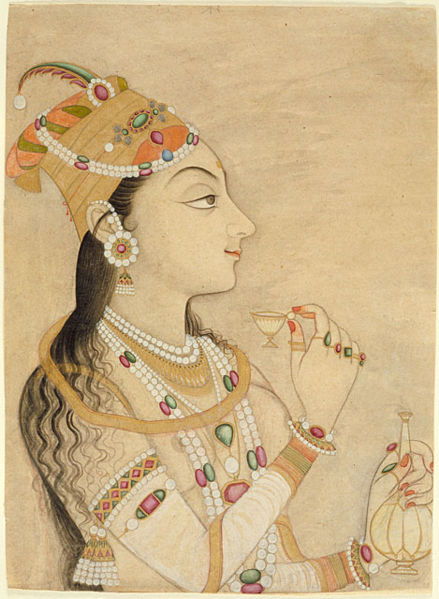
Padshah Begum of the Mughal Empire. Image: · Public domain · Wikimedia Commons
Nur Jahan, whose name means Light of the World, was the favourite wife of the Mughal emperor Jahangir and the most powerful woman in Mughal history. From 1611 until 1627 she helped rule one of the richest empires on Earth.
Nur Jahan issued royal orders, had coins struck in her name, designed gardens and buildings, and even led troops to rescue the emperor when he was captured.
Key Facts
['Born', '1577, in Kandahar (now in Afghanistan)']
['Birth name', 'Mehr-un-Nissa']
['Became empress', 'Married Emperor Jahangir in 1611']
['Title means', 'Light of the World']
['Coins', 'Struck in her name — rare for a Mughal queen']
['Died', '1645, in Lahore']
From widow to empress
Mehr-un-Nissa was born during a family journey from Persia to India. She grew up at the Mughal court, married an officer, and was widowed while still young.
In 1611 she married Emperor Jahangir. He adored her intelligence and judgement, gave her the title Nur Jahan, and trusted her with more and more of the work of ruling.
Power behind — and beside — the throne
Jahangir was often ill and fond of wine and opium, so Nur Jahan's role grew. Royal orders went out over her seal, and in 1623 coins were issued bearing her name beside the emperor's — an honour no other Mughal queen received.
She was also a poet, a designer of fabrics and gardens, and a brave huntress. Court stories tell of her shooting tigers from an elephant during royal hunts.
Rescue, fall and quiet years
In 1626, a rebel general captured Jahangir. Nur Jahan rode with the rescue army and, when the first attempt failed, surrendered herself to join her husband — then helped plan his escape, which succeeded.
After Jahangir died in 1627, her chosen candidate lost the fight for the throne to Shah Jahan. Nur Jahan retired to Lahore, where she lived quietly until 1645. Her elegant tomb stands in Shahdara, near the tomb she helped design for Jahangir.
Did You Know?
Nur Jahan designed the tomb of her father, Itimad-ud-Daulah in Agra — a jewel-like marble building often called a first draft of the Taj Mahal.