This article is written in English. Choose a language to open an automatic translation by Google Translate. Automatic translations can sometimes get historical names and dates wrong — for full accuracy, read the original English article.
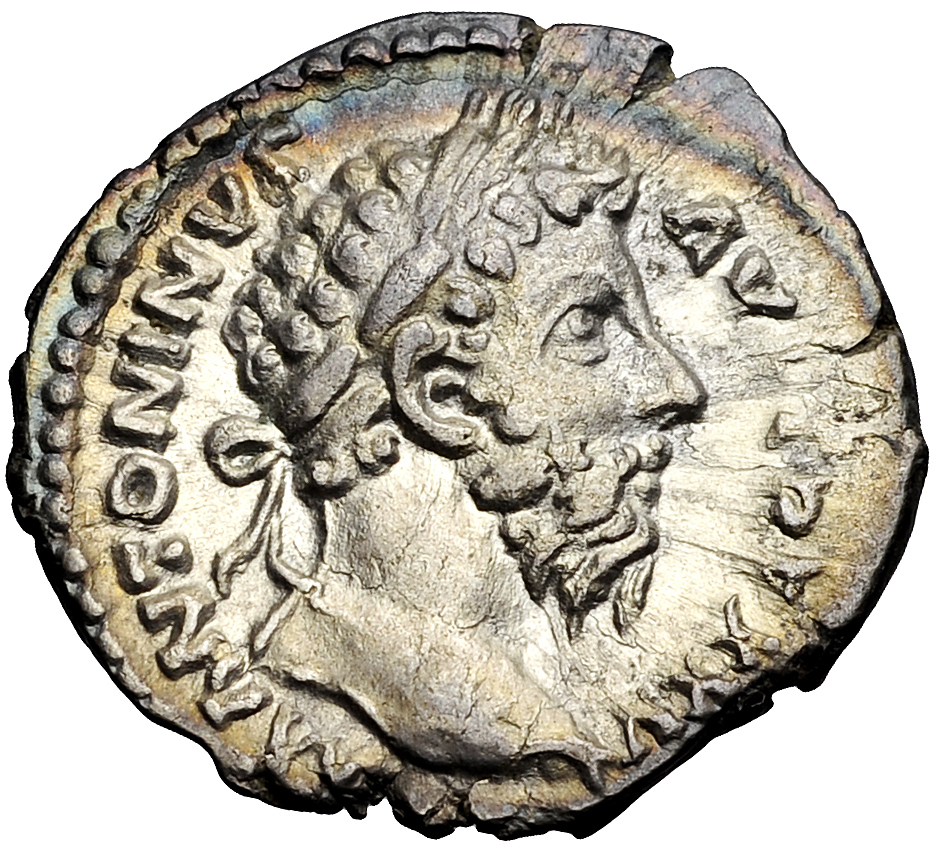
Denarius featuring emperor Marcus Aurelius. Image: Rasiel Suarez · CC BY-SA 3.0 · Wikimedia Commons
Roman coins jingled in every market of the empire — and they were more than money. Each coin carried the emperor's face and a message, making coins the empire's newspapers, posters and purse in one.
From the silver denarius that paid a legionary's wages to the gold aureus of the rich, Roman money joined the empire together: a coin from Rome was accepted from Britain to Syria.
Key Facts
['Famous coin', "The silver denarius — about a soldier's daily wage in early times"]
['Gold coin', 'The aureus; later the solidus, trusted for about 700 years']
['Small change', 'Bronze coins — the as, sestertius and dupondius']
['Pictures', "The ruler's head on one side; gods, buildings or victories on the other"]
['First coins', 'Rome began minting about 300 BCE, copying Greek neighbours']
['Money changers', "Worked at benches (bancae) — the origin of the word 'bank'"]
Coins as messages
Every new emperor put his portrait on the coins, so people in far provinces knew his face. The other side announced his deeds: a victory, a new temple, peace, or plenty.
Coins were struck by hand — a worker placed a blank disc between two engraved dies and hit it with a hammer. Millions were made, and buried hoards of them are still found by farmers and treasure hunters today.
Money at work
Soldiers, officials and builders were paid in coin, and taxes had to be paid in coin too — which pushed the whole empire to use Roman money. Markets priced goods in sestertii; a loaf of bread cost a fraction of a denarius, while a house cost many thousands.
But bad emperors cheated: Nero and later rulers quietly mixed cheaper metal into the silver coins. By the 200s CE the 'silver' denarius was mostly bronze, prices soared, and trust in money collapsed — one cause of the empire's great crisis.
The coin that outlived Rome
In the east, Constantine's gold solidus restored trust. It kept its weight and purity for about 700 years, becoming the standard money of the Mediterranean world long after Rome's western empire fell.
Roman coins still speak today: their portraits show us the emperors' real faces, and their designs taught later ages — including our own — what money should look like.
Did You Know?
A famous denarius type is the 'tribute penny' of the Bible story — a coin of the emperor Tiberius, which is why people in the story asked whose head was on the coin.