The Buddha
This article is written in English. Choose a language to open an automatic translation by Google Translate. Automatic translations can sometimes get historical names and dates wrong — for full accuracy, read the original English article.
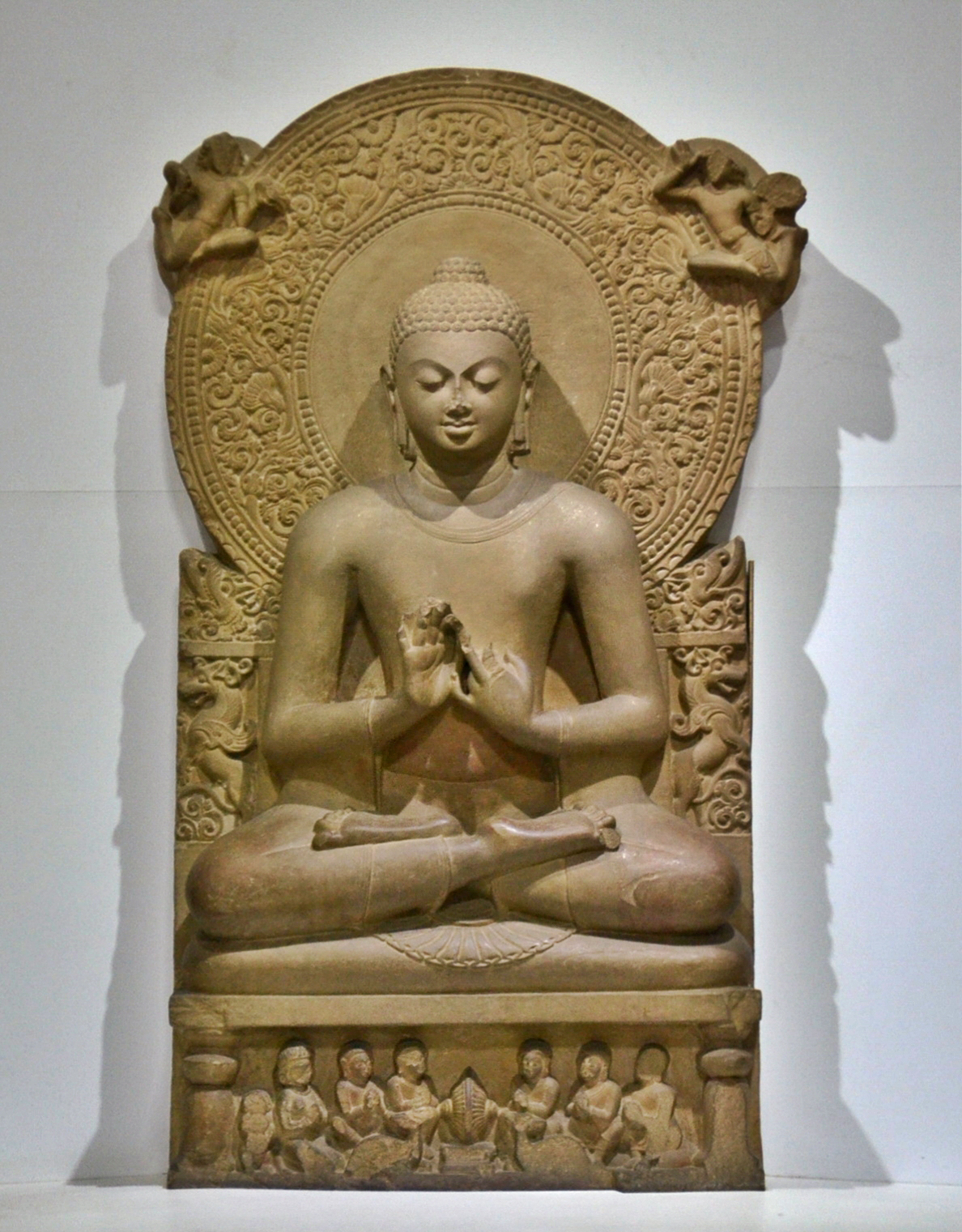
Image: พระมหาเทวประภาส วชิรญาณเมธี · CC BY-SA 3.0 · Wikimedia Commons
The Buddha was Siddhartha Gautama, a prince of the Himalayan foothills who lived about 2,500 years ago. Renouncing his palace at twenty-nine, he spent years seeking the answer to suffering — and, tradition says, found it in one night of meditation under a fig tree, becoming 'the Buddha': the Awakened One.
His teaching — that suffering comes from craving, and can end by following the Eightfold Path — became Buddhism, one of the world's great religions, followed today by hundreds of millions. He is honoured as a teacher and sage, not worshipped as a creator god.
Key Facts
- ['Lived', 'About 563–483 BCE (dates debated)']
- ['Born', 'Lumbini, in modern Nepal']
- ['Name', 'Siddhartha Gautama, of the Shakya clan']
- ['Enlightenment', 'At Bodh Gaya, under the Bodhi tree']
- ['First sermon', 'At Sarnath, to five former companions']
- ['Teaching heart', 'The Four Noble Truths and the Eightfold Path']
The prince who saw suffering
Siddhartha Gautama was born, tradition says, at Lumbini in the foothills of the Himalayas, son of a ruler of the Shakya clan. Prophets declared the boy would become either a great king or a great holy man — so his father, choosing kingship, raised him in luxury behind palace walls, shielded from every sight of age, sickness and death.
At twenty-nine, the story goes, Siddhartha rode out and saw four sights that changed his life: an old man, a sick man, a corpse, and a wandering holy man at peace. Realising that suffering waits for everyone — even princes — he left the palace that night, leaving his wife and newborn son, to seek its cause and cure.
The search and the awakening
For six years Siddhartha studied with teachers and practised extreme self-denial, fasting until he was skin and bone — and found that starving the body did not free the mind. He chose a 'Middle Way' between luxury and torment: he ate, sat down beneath a fig tree at Bodh Gaya, and vowed not to rise until he understood.
In one night of deep meditation, Buddhist tradition says, he saw the truth of existence: that all things change, that craving and ignorance bind beings to suffering and rebirth, and that freedom — nirvana — is possible. He woke as the Buddha, 'the Awakened One', and spent some weeks deciding whether such a truth could even be taught.
Forty-five years of teaching
The Buddha walked to Sarnath, near Varanasi, and gave his first sermon to five former companions — 'setting in motion the wheel of dharma'. Its core: the Four Noble Truths — life involves suffering; suffering arises from craving; suffering can cease; and the way to its end is the Noble Eightfold Path of right view, intention, speech, action, livelihood, effort, mindfulness and concentration.
For forty-five years he taught across northern India — kings and outcasts, merchants and monks — founding an order of monks (sangha) and, after persuasion, of nuns. He rejected caste as a measure of worth and taught in the people's language, not priestly Sanskrit. He died at about eighty at Kushinagar, telling his followers to be 'lamps unto yourselves'.
The Buddha's legacy
Three centuries later the emperor Ashoka embraced Buddhism and sent missions across Asia; along the Silk Road and the sea routes it spread to Sri Lanka, Tibet, China, Korea, Japan and Southeast Asia, evolving into its great traditions — Theravada, Mahayana and Vajrayana. Today some 300–500 million people follow the Buddha's path.
His image — seated, serene, eyes lowered — is among the most recognisable in world art, and his ideas about mindfulness and compassion now travel far beyond religion itself. Few teachers in history have been heard by so many, for so long, without ever raising an army or writing a book.
The Buddha's first sermon was given in a deer park at Sarnath — and the wheel he 'set in motion' there, the dharmachakra, appears today on the flag of India.
Related Topics
Sources
Reviewed: 24 November 2026
Read this article in the interactive Pastloom reader →