This article is written in English. Choose a language to open an automatic translation by Google Translate. Automatic translations can sometimes get historical names and dates wrong — for full accuracy, read the original English article.
Ancient Egyptian funerary text. Image: Hunefer · Public domain · Wikimedia Commons
The Egyptian Book of the Dead was not one single book. It was a collection of about 200 spells, prayers and pictures written on papyrus scrolls and placed in tombs to guide the dead safely through the afterlife.
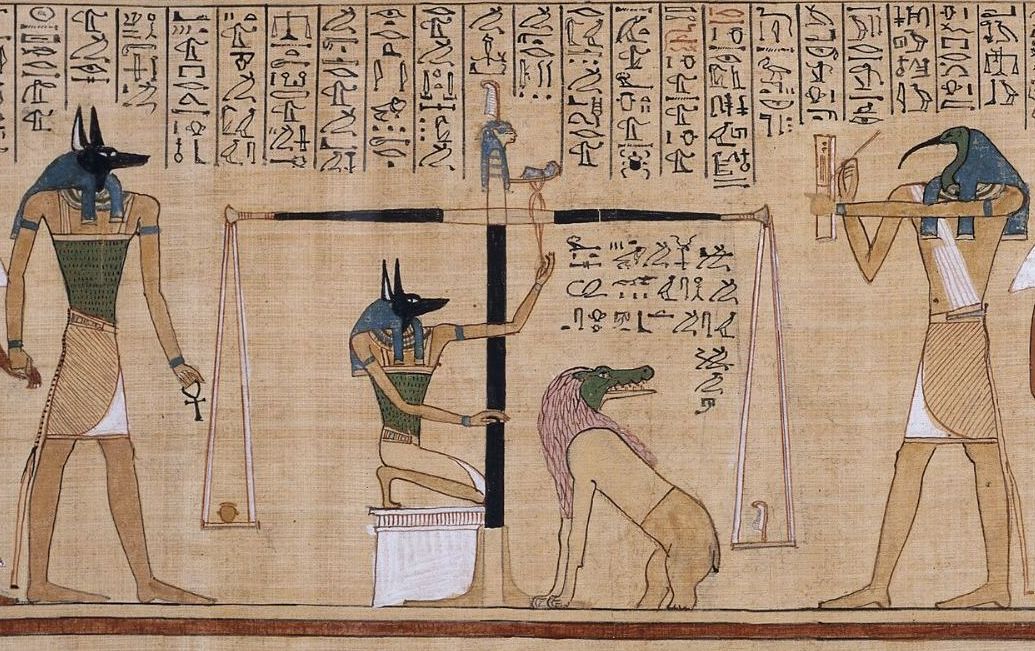
Its most famous scene shows the heart of the dead person being weighed against a feather. If the heart was light and honest, the soul could enter a happy land of the dead.
Key Facts
['Egyptian name', "'Book of Coming Forth by Day'"]
['Number of spells', 'About 200, chosen by each buyer']
['Written on', 'Papyrus scrolls placed in the tomb']
['Used', 'From about 1550 BCE for over 1,000 years']
['Most famous copy', 'The Papyrus of Ani, now in the British Museum']
['Key scene', 'The weighing of the heart against the feather of truth']
A guidebook for the afterlife
Egyptians believed the journey after death was full of dangers — gates guarded by demons, rivers of fire and gods who asked hard questions. The Book of the Dead was the traveller's guide and answer book.
Its spells told the soul what to say at each gate, the secret names of the gods, and how to turn into a bird or a lotus flower. Wealthy families bought long, beautifully painted scrolls; poorer people bought short ones.
The weighing of the heart
The greatest moment in the book is the judgement. In the hall of Osiris, the jackal-headed god Anubis weighs the dead person's heart against the feather of Ma'at, goddess of truth.
The dead person recites a list of sins they have NOT done — 'I have not stolen, I have not lied, I have not killed.' If the scales balance, the soul is declared 'true of voice' and welcomed into the afterlife.
Ani's beautiful scroll
The finest surviving copy belonged to Ani, a royal scribe of Thebes, and his wife Tutu. Written about 1250 BCE, it stretches for about 24 metres of painted papyrus.
Today it is one of the treasures of the British Museum, and its pictures of the judgement of the dead are among the most famous images from ancient Egypt.
Did You Know?
No two copies of the Book of the Dead are exactly the same — each buyer chose which spells they wanted and could afford.