This article is written in English. Choose a language to open an automatic translation by Google Translate. Automatic translations can sometimes get historical names and dates wrong — for full accuracy, read the original English article.
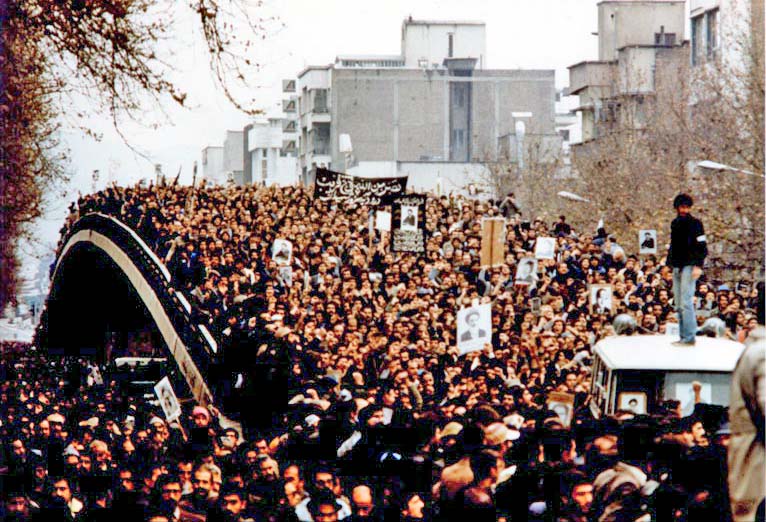
A demonstration in Iran against the Shah, 1978 at College Bridge, Tehran A photo from sajed.ir which has published under GFDL. Image: Unknown author Unknown author · GFDL · Wikimedia Commons
In 1979, the people of Iran overthrew their king, the Shah, in one of the most surprising revolutions of modern times. Iran had seemed rich and strong, with a huge army and the friendship of the United States — yet within months the Shah had fled and an Islamic government had taken his place.
Led from exile by the religious leader Ayatollah Ruhollah Khomeini, the revolution created the Islamic Republic of Iran and changed politics across the Middle East and the world.
Key Facts
['When', '1978–1979']
['Where', 'Iran']
['Ruler overthrown', 'Mohammad Reza Shah Pahlavi']
['Result', 'The Islamic Republic of Iran, declared April 1979']
Why Iranians turned against the Shah
The Shah modernised Iran with oil money — building roads, universities and factories — but he ruled as an autocrat. His secret police, SAVAK, arrested and tortured opponents, and many Iranians felt their country was controlled by America and losing its Islamic identity.
In 1978, protests grew after a newspaper insulted Khomeini. Each demonstration was met with shooting, and each funeral led to bigger protests forty days later — a cycle that filled the streets.
The Shah falls
Millions marched in December 1978 in some of the largest protests ever seen. Strikes, especially in the oil fields, stopped the economy.
The Shah left Iran in January 1979 'on holiday' and never returned. Khomeini flew home from Paris on 1 February to be greeted by millions, and within days the armed forces declared neutrality and the old regime collapsed.
The Islamic Republic
A referendum made Iran an Islamic Republic, with Khomeini as Supreme Leader and laws based on Islamic principles. Women were required to wear the hijab, and relations with the West collapsed.
Later in 1979, students seized the US embassy in Tehran and held 52 Americans hostage for 444 days. In 1980 Iraq invaded, beginning the long Iran-Iraq War. The revolution's effects — on Iran, its neighbours and world politics — continue today.
Did You Know?
Khomeini spread his message on cassette tapes: his sermons, recorded in exile, were copied from tape to tape and played in mosques and homes all over Iran — an early example of a revolution powered by cheap media.