The Lost Army of Cambyses
This article is written in English. Choose a language to open an automatic translation by Google Translate. Automatic translations can sometimes get historical names and dates wrong — for full accuracy, read the original English article.
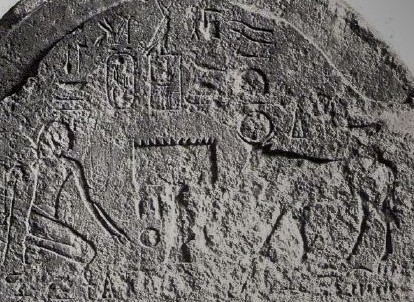
Image: Jona Lendering · Public domain · Wikimedia Commons
Around 524 BCE, the Persian king Cambyses II sent an army of 50,000 men across Egypt's Western Desert to attack the oracle of Amun at the Siwa Oasis. According to the Greek historian Herodotus, a giant sandstorm rose up and buried the whole army — every single man.
No certain trace of the army has ever been found. For 2,500 years it has been one of history's great disappearing acts — and the truth may be stranger than the storm.
Key Facts
- ['The king', 'Cambyses II of Persia, who conquered Egypt in 525 BCE']
- ['The mission', 'To punish the oracle of Amun at Siwa, whose priests had offended the king']
- ['The source', 'Herodotus wrote the story about a century later — our only ancient account']
- ['The army', 'Herodotus says 50,000 men marched from Thebes into the desert']
- ['The storm', "A great south wind raised 'vast hills of sand' that buried the army, Herodotus reports"]
- ['A new theory', 'Research published in 2014 suggested the army was actually defeated by an Egyptian rebel king — and the storm story covered up the defeat']
The king who conquered Egypt
Cambyses II inherited the vast Persian Empire from his father, Cyrus the Great, and in 525 BCE he conquered Egypt, adding its ancient kingdom to Persia's lands. But the priests of Amun at the remote Siwa Oasis, Herodotus says, spoke against him.
From Thebes, Cambyses sent a great army west across the desert to seize the oasis and destroy the oracle's shrine. Guides led them to an oasis seven days out — then the army marched on toward Siwa, and out of history.
Buried by the desert — the famous story
Herodotus tells what the people of Siwa later reported: when the army was halfway across the sands, a mighty wind from the south blew for days, piling the dunes over men, weapons and animals until nothing remained. The Persians never arrived, and no one in the ancient world claimed to have found a single survivor or bone.
The tale has been retold for 2,500 years, and the empty desert — where a whole army could indeed vanish without trace — makes it impossible to disprove.
Hunting for the lost army
Explorers have searched since the 1800s. In 2009 two Italian brothers announced bronze weapons, jewellery and human remains found in the desert, which they linked to Cambyses' men — but other experts questioned the claim, and no scientific proof followed.
Egyptologist Olaf Kaper offered a different answer in 2014: inscriptions suggest the army was ambushed and defeated near the Dakhla Oasis by the Egyptian rebel Petubastis III. Persia's later king Darius, Kaper argues, preferred a story about a sandstorm to admitting a defeat. Army, storm or cover-up — the desert has not yet given up its secret.
If 50,000 men truly vanished, it would rank among the largest military losses of the ancient world — yet not one verified shield, sword or skeleton from Cambyses' army has ever been produced.
Related Topics
Sources
Reviewed: 22 November 2026
Read this article in the interactive Pastloom reader →