The Mary Celeste
This article is written in English. Choose a language to open an automatic translation by Google Translate. Automatic translations can sometimes get historical names and dates wrong — for full accuracy, read the original English article.
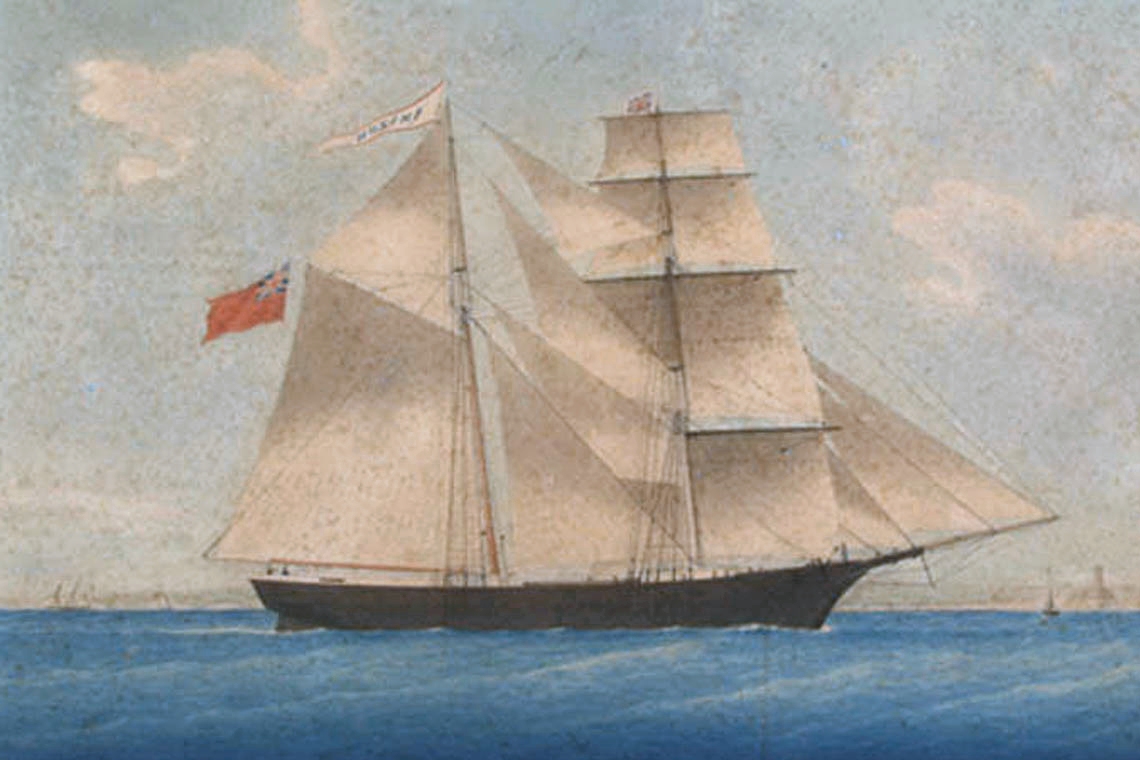
Image: Unconfirmed, possibly Honore Pellegrin (1800–c.1870). This speculative attribution is · Public domain · Wikimedia Commons
On 4 December 1872, the crew of the ship Dei Gratia spotted another vessel drifting in the Atlantic near the Azores. It was the Mary Celeste — sailing oddly, with nobody on board. Her captain, his wife, their little daughter and seven crew members had all disappeared.
The ship was sound, her cargo untouched and her lifeboat gone — but no one ever proved what happened. The Mary Celeste became the world's most famous ghost ship.
Key Facts
- ['Found', '4 December 1872, drifting in the Atlantic, by the brigantine Dei Gratia']
- ['The missing', 'Captain Benjamin Briggs, his wife Sarah, daughter Sophia and seven crew — ten people']
- ['The cargo', '1,701 barrels of industrial alcohol — almost all still on board']
- ['What was gone', "The ship's lifeboat, along with some navigation papers and instruments"]
- ['What was not found', 'No sign of violence, fire or struggle — and no note explaining anything']
- ['The story grows', 'A short story by Arthur Conan Doyle in 1884 added myths that are still repeated today']
A ship sailing herself
The boarding party from Dei Gratia found the Mary Celeste under partial sail, with about a metre of water sloshing in her hold and one pump out of action. The last entry on her log slate, dated 25 November, put her near the Azores.
For nine days and some 400 nautical miles, the ship had sailed on alone with no hand on her wheel. Meals and belongings were left behind in an orderly way — this was no scene of attack or panic, but of a sudden, tidy departure.
The enquiry and the theories
A court in Gibraltar investigated, suspicious of foul play, but found nothing it could prove. Ever since, theories have multiplied: a waterspout, pirates, mutiny, a seaquake, giant squid — even alien abduction in modern retellings.
The most likely explanation is the plainest. The cargo of raw alcohol could leak frightening fumes, and the crew had opened hatches. Captain Briggs may have feared an explosion or that his ship was sinking, ordered everyone into the lifeboat on a tow rope — and the rope parted. The ship sailed on; the boat and its ten people were never seen again.
The ship's sad end — and the legend
The Mary Celeste was salvaged, sold and sailed on for twelve more years under other owners. In 1885 her last captain wrecked her deliberately on a reef off Haiti in an insurance fraud, and was arrested — an unglamorous end for a famous ship.
It was Conan Doyle's fictional tale, which renamed her 'Marie Celeste', that made her immortal. The real records are stranger than the fiction in one way: after 150 years, not one of the ten people has ever been traced.
Conan Doyle's story was invented — but it was so popular that many people still call the ship 'Marie Celeste', the name from his tale, instead of her real name, Mary Celeste.
Related Topics
Sources
Reviewed: 22 November 2026
Read this article in the interactive Pastloom reader →