This article is written in English. Choose a language to open an automatic translation by Google Translate. Automatic translations can sometimes get historical names and dates wrong — for full accuracy, read the original English article.
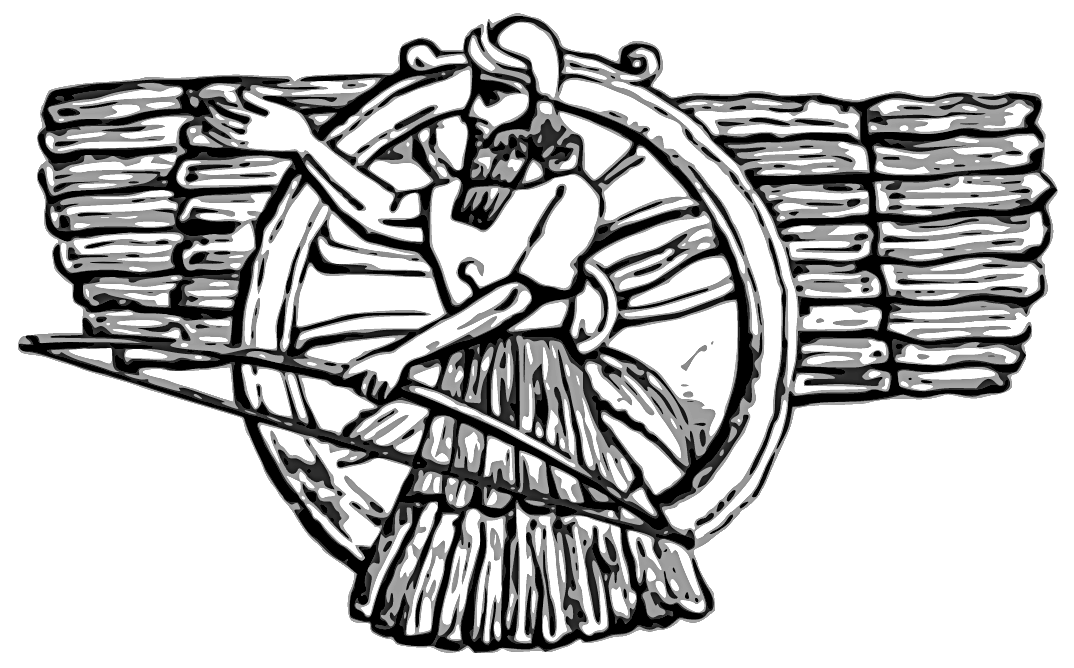
Emblem of the god Ashur, from an ancient Assyrian relief in Nimrud. Image: Austen Henry Layard (1817–1894) · Public domain · Wikimedia Commons
Assyria, in the north of modern Iraq, built the first truly great empire of the ancient Near East. Between about 900 and 612 BCE, its kings ruled lands from Egypt to Persia.
This article looks at how that empire worked: its feared army of iron weapons and siege engines, its roads and messengers, and the great royal library that saved the ancient world's stories.
Key Facts
['Heartland', 'Northern Iraq, on the River Tigris']
['Capitals', 'Ashur, Nimrud and Nineveh']
['Peak', 'About 900–612 BCE (the Neo-Assyrian Empire)']
['Army', 'Iron weapons, siege engines and cavalry']
['Ended', '612 BCE — Nineveh fell to Babylonians and Medes']
An empire run like a machine
Assyrian kings divided their lands into provinces, each with a governor who reported to the king. Royal roads with rest stations let messengers carry orders across the empire faster than ever before.
People conquered by Assyria were often moved far from home and settled in new lands. This cruel policy broke resistance — and mixed peoples and skills across the Near East.
The army everyone feared
Assyria's army was the ancient world's most professional force: archers, spearmen, cavalry and engineers with battering rams, siege towers and iron weapons.
Stone carvings from Assyrian palaces show this army in action — and also show the kings hunting lions, the royal sport that proved a king's strength.
Ashurbanipal's library
The last great Assyrian king, Ashurbanipal, collected clay tablets from across his empire for a royal library at Nineveh — tens of thousands of them.
Buried when Nineveh fell in 612 BCE, the tablets survived. When archaeologists dug them up in the 1800s, they gave back lost works such as the Epic of Gilgamesh, one of the oldest stories in the world.
Did You Know?
Ashurbanipal was proud that he could read and write — rare for a king of his time. He called reading the writings of the ancients one of his royal skills.