This article is written in English. Choose a language to open an automatic translation by Google Translate. Automatic translations can sometimes get historical names and dates wrong — for full accuracy, read the original English article.
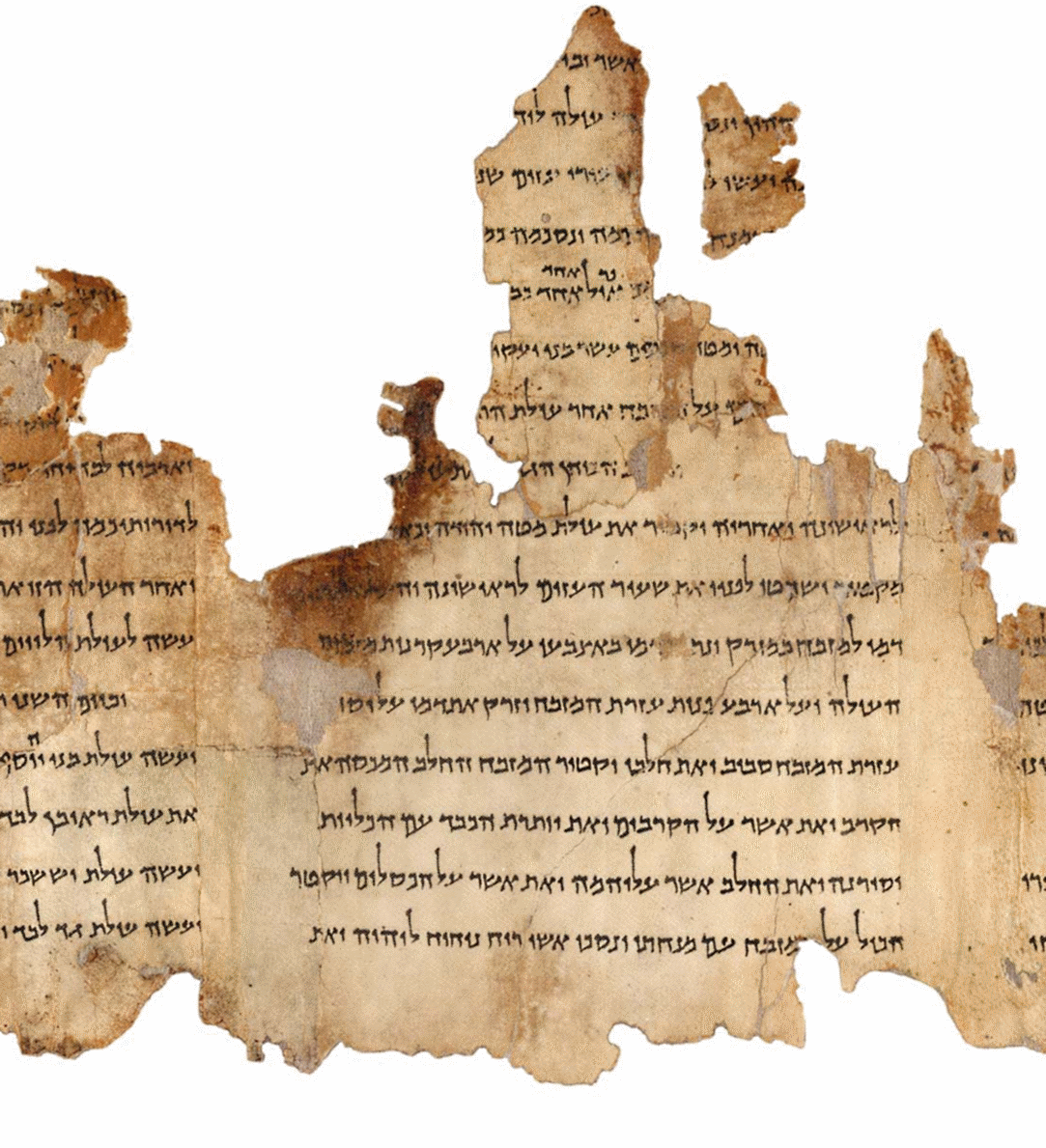
Portion of the Temple Scroll, labeled 11Q19, one of the longest of the Dead Sea Scrolls. Image: Israel Museum · Public domain · Wikimedia Commons
The Dead Sea Scrolls are a collection of ancient manuscripts, written more than 2,000 years ago and hidden in caves near the Dead Sea.
They include the oldest known copies of the books of the Hebrew Bible. Their discovery in 1947 is one of the greatest archaeological finds of modern times.
Key Facts
['Written', 'About 250 BCE to 68 CE']
['Found', 'From 1946–47, in caves at Qumran']
['Caves', 'Eleven caves held scrolls']
['Manuscripts', 'About 900, many in fragments']
['Languages', 'Mostly Hebrew, some Aramaic and Greek']
['Written on', 'Parchment and papyrus']
Shepherds find a treasure
In 1946 or 1947, young Bedouin shepherds searching for a lost goat threw a stone into a cave near the ruins of Qumran — and heard the sound of breaking pottery.
Inside were tall clay jars containing leather scrolls, wrapped in linen. The shepherds sold them for a small sum, not knowing they had found manuscripts older than any Bible copy then known — older by a thousand years.
Who wrote the scrolls?
Most scholars connect the scrolls with a strict Jewish community, often identified as the Essenes, who lived at Qumran and prized purity and study. As Roman armies advanced during a revolt, the community seems to have hidden its library in the caves for safety.
The collection includes copies of nearly every book of the Hebrew Bible, prayers, hymns, rules for the community, and writings about a coming age of judgment. The Great Isaiah Scroll is almost complete — and matches the book of Isaiah read today with remarkable closeness.
Why the scrolls matter
Before the scrolls, the oldest complete Hebrew Bible manuscripts were about a thousand years younger. The scrolls showed how carefully the texts had been copied across the centuries, and they opened a window onto Jewish life in the time between the Old and New Testaments.
Scholars are still piecing together tens of thousands of fragments, now with the help of DNA tests and computer imaging. After 2,000 years in the dark, the scrolls are still giving up their secrets.
Did You Know?
Some scrolls were sold through a newspaper advertisement in 1954 — listed under miscellaneous antiques — before an Israeli scholar recognised them and brought them to Jerusalem.