History of Poetry
This article is written in English. Choose a language to open an automatic translation by Google Translate. Automatic translations can sometimes get historical names and dates wrong — for full accuracy, read the original English article.
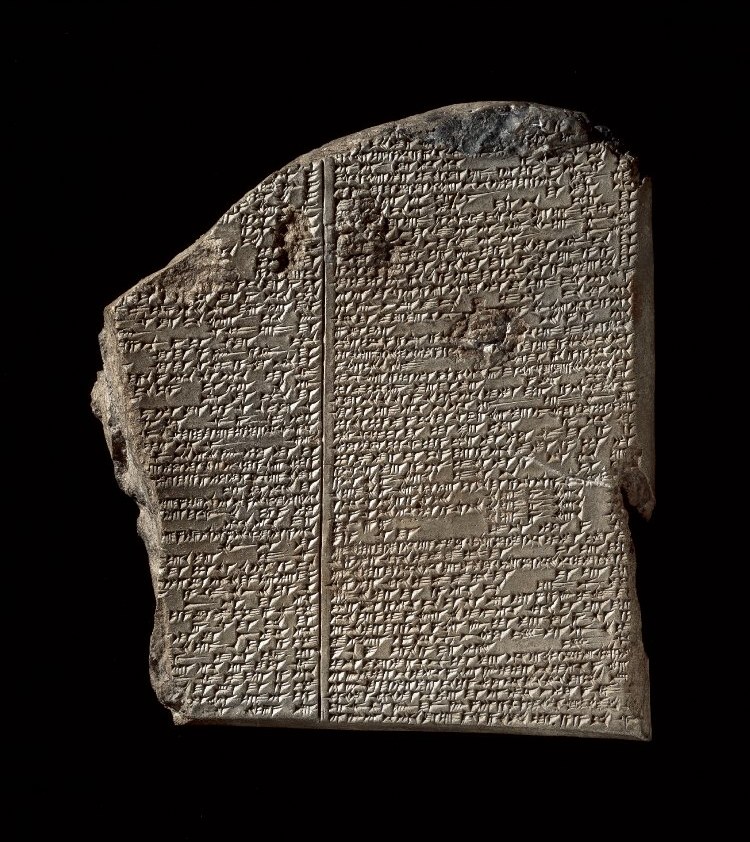
Image: · Public domain · Wikimedia Commons
Poetry is language shaped by rhythm, sound and image — and it is older than writing itself. Long before books, people sang poems to remember the deeds of heroes, the stories of gods, and the knowledge of their people.
From the epic poems of Mesopotamia and Greece to the love lyrics of Persia and China, and the rap and spoken-word stages of today, poetry has never stopped changing its forms.
Key Facts
- ['Oldest known epic', 'The Epic of Gilgamesh, from Mesopotamia, over 4,000 years old']
- ['Great Greek epics', "Homer's Iliad and Odyssey, about 700s BCE"]
- ['Famous Chinese collection', 'The Shijing (Book of Songs), about 1000–600 BCE']
- ['Persian masters', 'Rumi and Hafez, 1200s–1300s CE']
- ['Japanese short form', 'Haiku — 17 syllables, developed by the 1600s']
- ["Shakespeare's poems", '154 sonnets, published 1609']
Poems before books
The first poems were sung, not written. Rhythm and rhyme helped singers remember thousands of lines. The Epic of Gilgamesh, from ancient Mesopotamia, tells of a king's search for eternal life; in India, the Vedas were preserved by chanting with extreme care for centuries.
Homer's Iliad and Odyssey set the pattern for epic poetry in Europe, while China's Book of Songs gathered folk songs and court poems. In West Africa, griots — poet-historians — kept the histories of kingdoms in memory and song.
Courts, love and faith
In the Middle Ages, poetry bloomed at courts: Persian poets such as Ferdowsi, Rumi and Hafez; Arabic poets of Spain; troubadours singing of love in France; and court poets in Japan, where the 17-syllable haiku grew from longer linked verse.
Printing changed poetry's reach. Shakespeare's sonnets, the works of John Donne and, later, the Romantic poets — Wordsworth, Keats, and in America Emily Dickinson and Walt Whitman — found readers far beyond any court. In India, Rabindranath Tagore won the Nobel Prize in Literature in 1913, the first non-European to do so.
Poetry today
The 1900s broke old rules: poets such as T. S. Eliot and Langston Hughes experimented with free verse, jazz rhythms and the speech of everyday life. Poetry moved into songs, protest marches and schoolrooms.
Today poetry lives in books, at festivals, in spoken-word competitions and in the lyrics of hip-hop — the most popular music poetry of the modern age. The tools have changed from clay tablets to phones, but the purpose is the same as it was 4,000 years ago: to make words sing, and to make them stay in the memory.
The Epic of Gilgamesh, written on clay tablets over 4,000 years ago, includes a flood story that is far older than the version in many later traditions.
Related Topics
Sources
Reviewed: 22 November 2026
Read this article in the interactive Pastloom reader →