This article is written in English. Choose a language to open an automatic translation by Google Translate. Automatic translations can sometimes get historical names and dates wrong — for full accuracy, read the original English article.
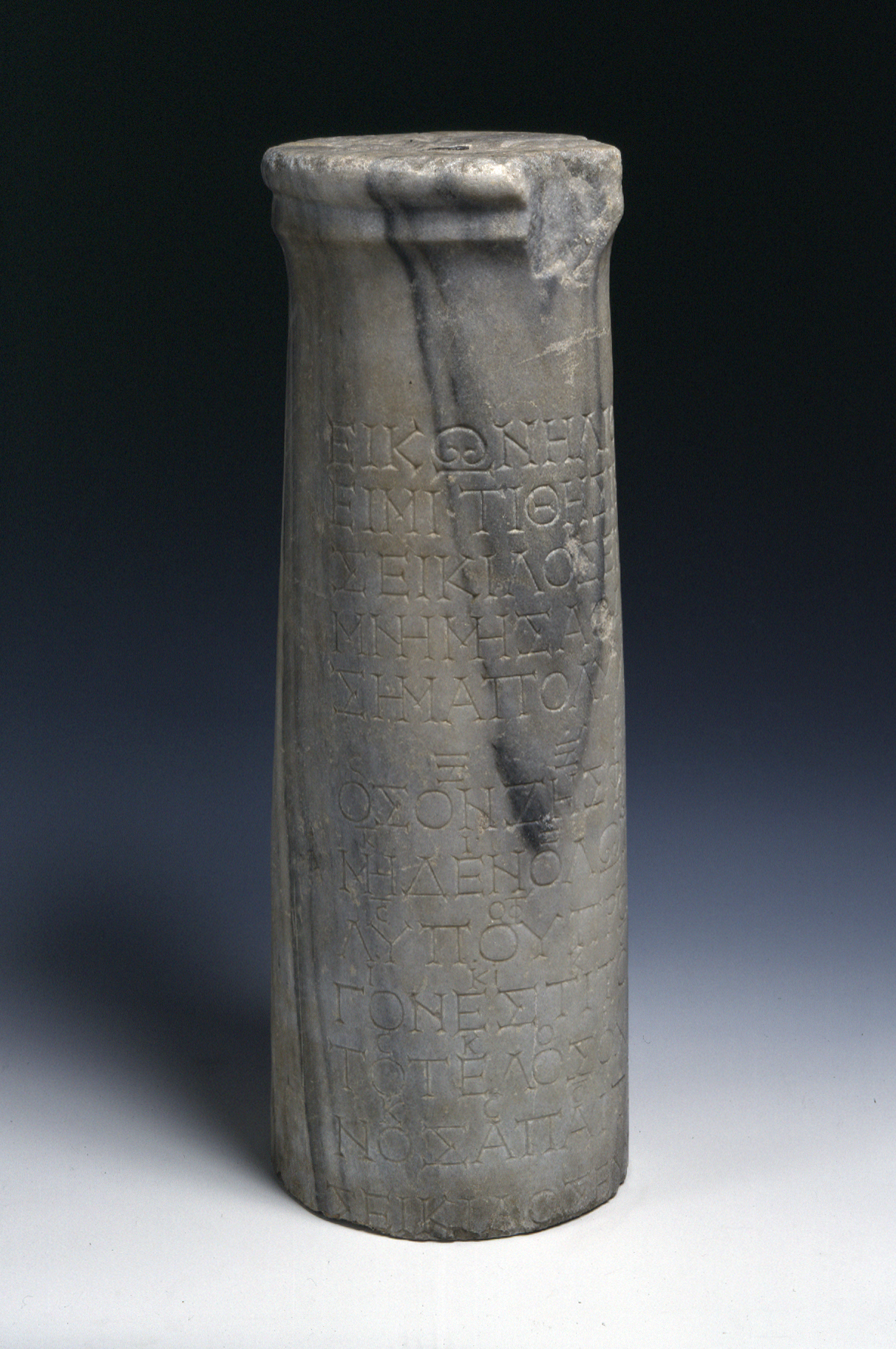
2. Stèle portant l’inscription de Seikilos. Image: inharecherche · CC BY 2.0 · Wikimedia Commons
Music is as old as humanity itself. The oldest known instruments are flutes made from bone and mammoth ivory, more than 40,000 years old.
Music has been used for worship, celebration, storytelling and protest in every culture. Its history is the history of human feeling, told in sound.
Key Facts
['Oldest instruments', 'Bone flutes, over 40,000 years old']
['Oldest written song', 'The Hurrian Hymn, about 3,400 years old']
['Musical notation', 'Developed in medieval monasteries']
['Great composers', 'Bach, Mozart, Beethoven']
['Recording begins', "1877, with Edison's phonograph"]
['Today', 'Music streams instantly around the world']
Music of the ancient world
Early people sang, clapped and beat drums. Flutes, lyres and harps appeared in Egypt, Mesopotamia, India, China and Greece, where music was part of religion and royal life.
The Greeks studied music as a kind of mathematics. In medieval Europe, monks sang plainchant in churches and slowly developed a way to write music down with notes.
Great composers and new instruments
The piano, violin and orchestra grew up in Europe between 1600 and 1900. Composers such as Bach, Mozart and Beethoven wrote music that is still played in concert halls today.
At the same time, every region of the world kept its own rich music — African drumming, Indian ragas, Chinese opera and folk songs passed from parents to children.
Recorded music changes everything
In 1877, Thomas Edison invented a machine that could record and play back sound. For the first time in history, music could travel without the musician.
Radio, records, cassettes and finally streaming followed. Today a song made in one small room can be heard on the other side of the Earth within seconds.
Did You Know?
Beethoven wrote some of his greatest music, including his famous Ninth Symphony, after he had become almost completely deaf.