This article is written in English. Choose a language to open an automatic translation by Google Translate. Automatic translations can sometimes get historical names and dates wrong — for full accuracy, read the original English article.
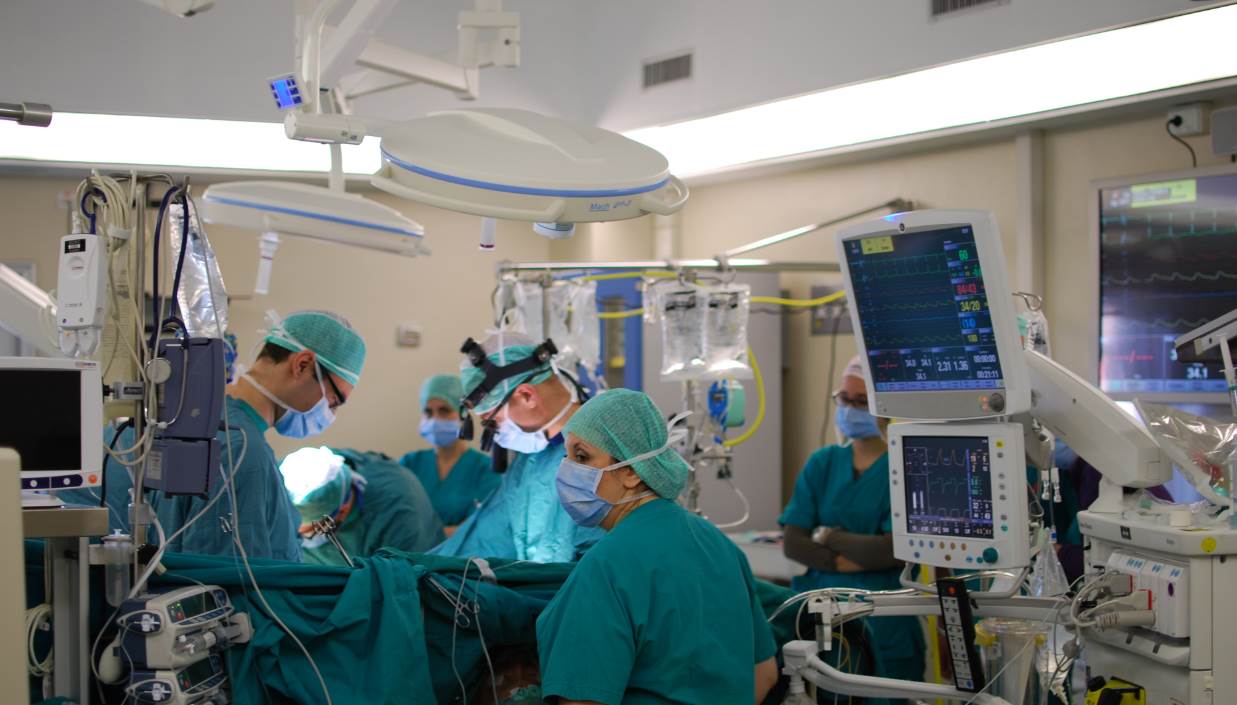
Cardiac surgical procedure at Gemelli Hospital in Rome. Image: Pfree2014 · CC BY-SA 4.0 · Wikimedia Commons
Surgery means healing the body by hand — cutting, stitching and removing what is sick. It is one of the oldest medical skills in the world: holes drilled in skulls thousands of years ago show signs of healing, which means some patients survived.
For most of history, surgery was done without pain relief and without knowledge of germs, so it was feared and dangerous. In the last 200 years it became safe, painless and precise.
Key Facts
['Oldest evidence', 'Trepanation — holes cut in the skull — from thousands of years ago']
['Great early surgeon', 'Sushruta of India, about 600 BCE, described many operations and tools']
['Medieval practice', 'Barbers often did surgery, because they owned sharp blades']
['Turning point for wounds', 'Ambroise Paré used gentle dressings instead of boiling oil in the 1500s']
['Pain conquered', 'Anaesthesia arrived in 1846']
['Germs conquered', "Joseph Lister's antiseptic surgery began in 1867"]
The first surgeons
Ancient healers set broken bones, stitched wounds and drained abscesses. In India, the surgeon Sushruta described operations for cataracts and nose repair, and trained students on melons and leather bags before touching a patient.
Egyptian and Greek doctors also wrote surgical guides. Roman army surgeons travelled with soldiers and became skilled at treating wounds quickly.
Barbers, battlefields and pain
In medieval Europe, learned doctors often avoided cutting, so barber-surgeons did operations — the red-and-white barber's pole is said to recall blood and bandages. Speed was everything, because the patient was awake and in agony.
War pushed surgery forward. On battlefields, surgeons like Ambroise Paré learned better ways to stop bleeding and close wounds, and their hard lessons slowly spread to civilian hospitals.
Clean, painless, modern surgery
Two revolutions made modern surgery possible: anaesthesia in 1846, which removed pain, and antiseptic — later sterile — technique, which stopped infection. Surgeons could finally work slowly and carefully inside the body.
X-rays, blood transfusion, antibiotics and tiny cameras followed. Today surgeons repair hearts, replace joints and operate through holes no bigger than a keyhole.
Did You Know?
A skilled surgeon of the early 1800s could amputate a leg in under a minute — speed mattered more than anything, because the patient felt every second.