This article is written in English. Choose a language to open an automatic translation by Google Translate. Automatic translations can sometimes get historical names and dates wrong — for full accuracy, read the original English article.
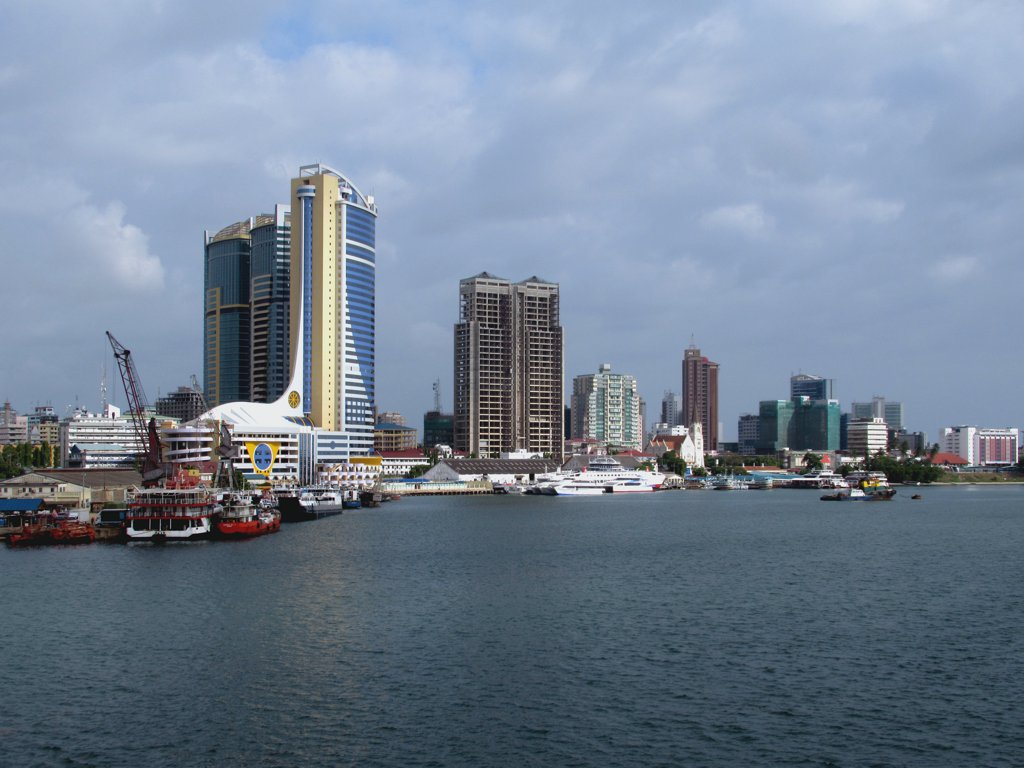
Dar Es Salaam Skyline (34011488084). Image: David Stanley from Nanaimo, Canada · CC BY 2.0 · Wikimedia Commons
Tanzania, in East Africa, holds some of the oldest evidence of human ancestors anywhere — at Olduvai Gorge, fossils and stone tools nearly two million years old have been found.
Its island of Zanzibar was a famous trading port for spices. The mainland won independence in 1961 under Julius Nyerere, and joined with Zanzibar in 1964 to form Tanzania.
Key Facts
['Capital', 'Dodoma (Dar es Salaam is the biggest city)']
['Ancient evidence', 'Olduvai Gorge — fossils and tools up to about 1.9 million years old']
['Island partner', 'Zanzibar, the spice island']
['Colonial rulers', 'Germany, then Britain']
['Independence', 'Tanganyika became free on 9 December 1961']
['First president', "Julius Nyerere, called Mwalimu — 'the Teacher'"]
Olduvai and the Swahili coast
At Olduvai Gorge, Mary and Louis Leakey found fossils of early human relatives, including the famous 'Nutcracker Man' in 1959. People have lived in this land ever since the Stone Age.
On the coast, Swahili towns and the island of Zanzibar traded gold, ivory and later cloves with Arabia, Persia and India. Zanzibar's sultans grew rich — but the trade in enslaved people brought deep suffering to the region.
Colony days
In the 1880s Germany seized the mainland as German East Africa. The Maji Maji rising of 1905–07 against harsh German rule was crushed with terrible loss of life.
After the First World War, Britain took over the territory, renamed Tanganyika. The teacher Julius Nyerere built a peaceful independence movement that united many peoples behind one language, Kiswahili.
Nyerere and modern Tanzania
Tanganyika became independent on 9 December 1961, with Nyerere as its leader. In 1964, after a revolution in Zanzibar, the islands and mainland united as the United Republic of Tanzania.
Nyerere's socialist experiment, called Ujamaa ('familyhood'), had mixed results, but he gave Tanzania peace, unity and pride, and stepped down voluntarily in 1985. Today Tanzania is famous for Mount Kilimanjaro, the Serengeti migration and its island beaches.
Did You Know?
Olduvai Gorge is sometimes called the Cradle of Humankind — stone tools found there are among the oldest ever discovered, made about 1.9 million years ago.