This article is written in English. Choose a language to open an automatic translation by Google Translate. Automatic translations can sometimes get historical names and dates wrong — for full accuracy, read the original English article.
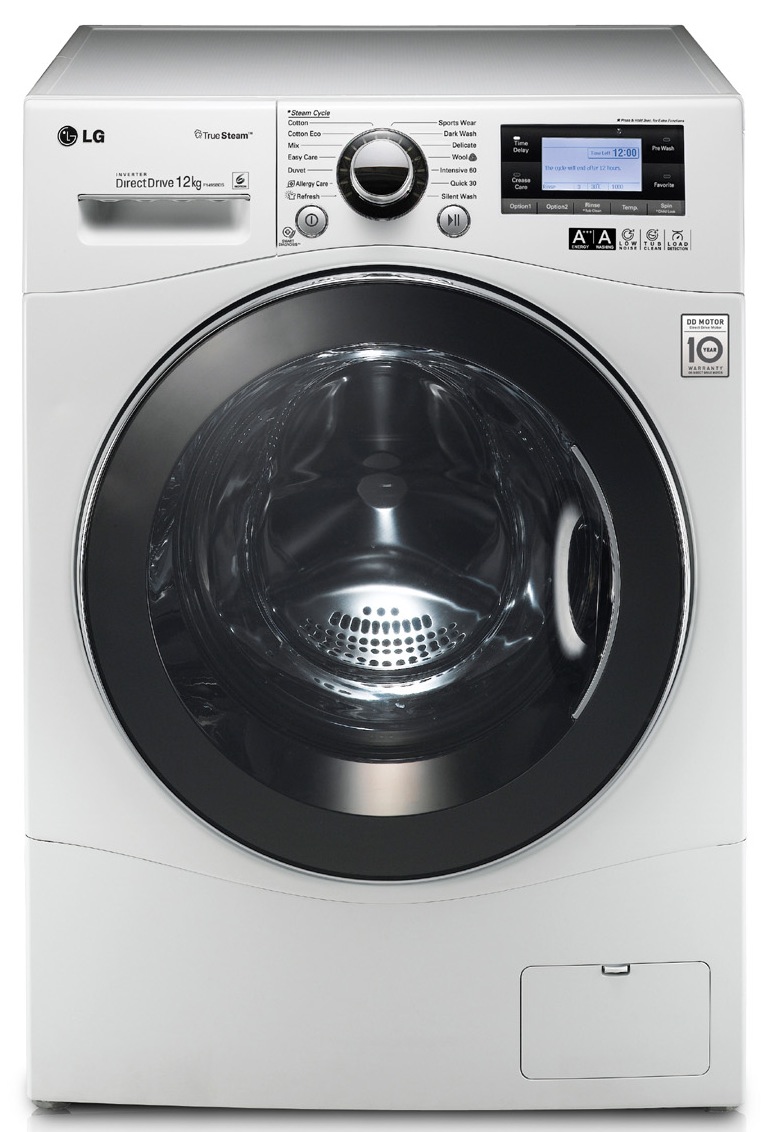
Machine that washes clothes. Image: LG전자 · CC BY 2.0 · Wikimedia Commons
Washing clothes was once the heaviest work of the week. A whole day — usually women's work — went to hauling water, scrubbing on boards, wringing by hand and hanging everything to dry.
The washing machine slowly took over that labour. Few inventions have given ordinary people, especially women, so many hours of life back.
Key Facts
['Old method', 'Rivers, washboards, mangles and hours of scrubbing']
['First drum patent', '1851 — James King, America']
['First electric washer', 'The Thor, 1908, by the Hurley Machine Company']
['First automatic machine', '1937 — the Bendix Home Washer']
['Washday', 'Monday was traditional washday in many countries']
['Time saved', "Hand washing a family's clothes could take a full day each week"]
The age of the washboard
For centuries, laundry meant water carried from wells or rivers, ash or soap for cleaning, and hard scrubbing. In towns, washerwomen took in washing; in great houses, laundry rooms steamed all week.
Inventors tried to help: wooden boxes you rocked, rollers that squeezed water out, and James King's hand-turned drum of 1851 — the ancestor of the modern machine's rotating heart.
Electricity takes the strain
When electric motors entered homes, Alva Fisher's 'Thor' of 1908 put the power of a motor into a washing tub. Machines with wringers and spinners spread through America and Europe in the 1920s and 1930s.
In 1937 the Bendix washer washed, rinsed and spun almost by itself — the first true automatic. After World War II, prices fell and the machine moved from luxury to necessity.
Laundry day transformed
Coin laundries — laundromats — opened for families without machines, becoming unlikely social meeting places. Twin-tubs, front-loaders and washer-dryers followed, each gentler and thriftier.
Historians note that the washing machine changed women's lives more than almost any other device: it turned the hardest day of the week into the press of a button.
Did You Know?
The economist Ha-Joon Chang has argued the washing machine changed the world more than the internet — because it freed millions of hours of women's labour every single week.