This article is written in English. Choose a language to open an automatic translation by Google Translate. Automatic translations can sometimes get historical names and dates wrong — for full accuracy, read the original English article.
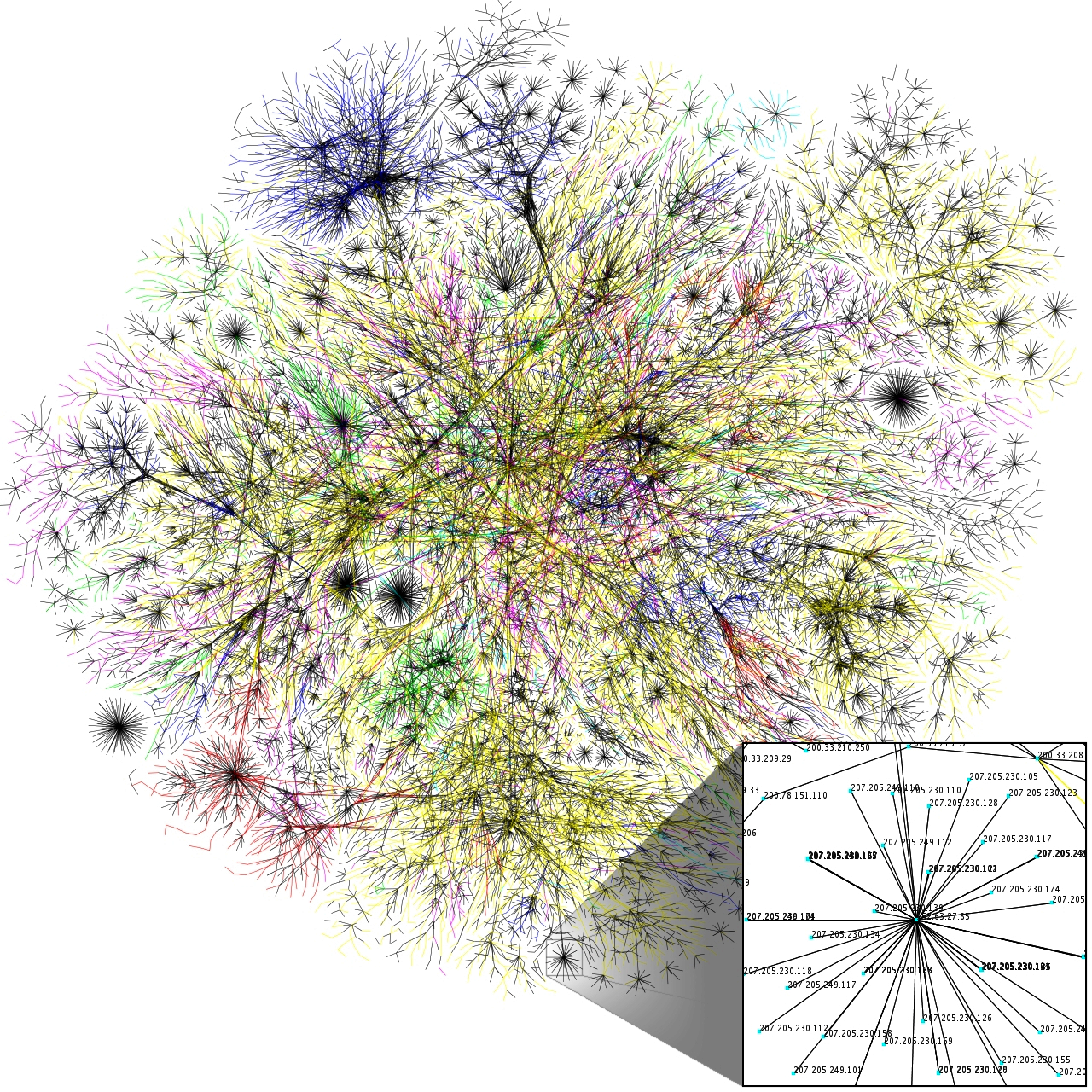
Global system of connected computer networks. Image: The Opte Project · CC BY 2.5 · Wikimedia Commons
In one generation, the internet moved from a tool for scientists into the middle of daily life. We now shop, bank, learn, work, play and talk through it — often without noticing it is there at all.
This article looks at the internet from a different angle than its invention: not how it was built, but how it quietly rebuilt an ordinary day.
Key Facts
['Public web arrives', 'Early 1990s — browsers make the internet easy for everyone']
['Email habit', 'By the late 1990s email replaces most personal letters']
['Online shopping', 'Amazon and eBay both founded in 1995']
['Search era', "Google founded 1998; 'to google' becomes a verb"]
['Social age', 'Facebook (2004) and YouTube (2005) reshape friendship and fame']
['Users today', 'More than 5 billion people online']
Letters, news and shopping move online
Email was the first everyday revolution: a letter that arrived in seconds, free. News followed — papers that once came once a day now update every minute, and anyone can publish to the world.
Shopping changed next. From 1995, Amazon and eBay let people buy books, then everything, from their chairs. Bank branches shrank into websites, and the high street began its long argument with the online shop.
Friends, fame and free knowledge
Social media rebuilt friendship: old classmates reappeared, families shared photographs instantly across oceans, and ordinary people could gather audiences once reserved for television stars — for better and for worse.
Knowledge moved too. Wikipedia, launched in 2001, put a free encyclopedia in every pocket, and video lessons teach everything from algebra to plumbing. Our own Pastloom library exists because the internet lets a small team share history with the whole world.
Work, play and the questions ahead
Office work escaped the office: video calls and shared documents let teams span continents, a change the COVID-19 pandemic pushed into nearly every home almost overnight. Games, music and films became streams instead of objects on shelves.
The everyday internet also brought everyday worries — privacy, misinformation and hours lost to glowing screens. The tool that connected the world is still teaching the world how to live with it.
Did You Know?
In 1995 only about 1 in 250 people on Earth used the internet. Today it is roughly 2 in every 3 — one of the fastest adoptions of any technology in history.